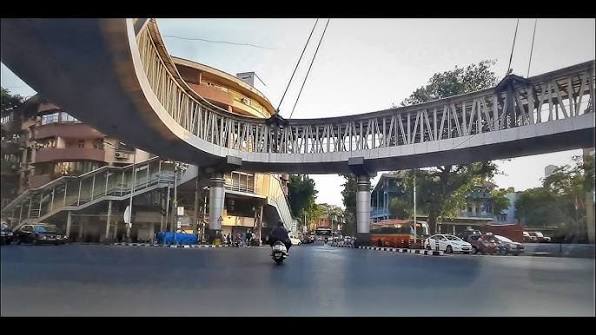
Nana Chowk is one of the most historically rich, architecturally vibrant, and culturally beloved intersections in South Mumbai, Maharashtra, India. Located at the boundaries of Tardeo and Grant Road — where six roads converge in a busy yet characteristically laid-back public square — this iconic chowk is named after Jagannath Shankarsheth Murkute (1803–1865), universally known as Nana Shankarsheth, one of the most towering figures in Mumbai’s history. Celebrated as the Chief Architect of Modern Mumbai, Nana Shankarsheth was the philanthropist who bankrolled the city’s earliest educational institutions, sat on the board of India’s first railway, rode in the historic first passenger train from Bombay to Thane on 16 April 1853, and donated hundreds of acres of land for the development of the city he loved. The chowk bearing his name stands in the very neighborhood where he lived — a permanent civic tribute to one of India’s greatest urban builders.
In 2026, Nana Chowk continues to thrive as one of South Mumbai’s most recognizable, lively, and historically resonant urban spaces. The six-road convergence pulls in traffic from Tardeo, Kemps Corner, Girgaon Chowpatty, Opera House, Kennedy Bridge, and Grant Road station, making it one of central Mumbai’s most naturally busy intersections. The Bhavani Shankar Mandir — built in 1809 by Nana’s father Babulnath Sunkersett — stands as a living heritage monument near the chowk, maintained to this day by the Shankarsheth family. Adarsh Mithai Mandir draws sweet-lovers from across the city. Lamington Road’s electronics bazaar is minutes away. And the streets of Gamdevi, Mani Bhavan, Gowalia Tank, and Girgaon Chowpatty beckon the heritage walker from every direction — placing Nana Chowk at the very center of one of Mumbai’s richest historical precincts.
Nana Chowk Mumbai Quick Details
| Category | Details |
| Location | Nana Chowk, MS Ali Road / PR Marg / August Kranti Road, Grant Road West, Tardeo, South Mumbai – 400007 |
| Also Known As | Jagannath Shankarsheth Chowk; Nana Shankarsheth Chowk |
| Roads Converging | Six roads: MS Ali Road, PR Marg, August Kranti Road, Tardeo Road, Kemps Corner Road, Kennedy Bridge Road |
| Nearest City | Thane (~22 km), Navi Mumbai (~30 km) |
| Highway | Connected via Western Express Highway and Eastern Freeway via city roads |
| Key Roads | MS Ali Road, August Kranti Road (Gowalia Tank Road), Tardeo Road, Kemps Corner, Lamington Road |
| Nearest Railway Stn | Grant Road Railway Station (~0.1 km) — Western Railway |
| Nearest Metro | Mumbai Metro Line 3 (Aqua Line) — Girgaon / Vidhan Bhavan stations (~1.5 km) |
| Nearest Airport | Chhatrapati Shivaji Maharaj International Airport (~18 km) |
| Bus Connectivity | BEST buses, taxis, autos, app-based cabs |
| Iconic Landmark | Bhavani Shankar Mandir (1809), Adarsh Mithai Mandir, Saifee Picture Frames, Lamington Road Electronics |
| Named After | Jagannath ‘Nana’ Shankarsheth (1803–1865) — Chief Architect of Modern Mumbai |
| Importance | Heritage, commercial, residential & transit hub |
| Nearby Areas | Tardeo, Grant Road, Gamdevi, Kemps Corner, Opera House, Girgaon, Mumbai Central |
| Pin Code | 400007 |
| Admin Body | Brihanmumbai Municipal Corporation (BMC) |
| Heritage | Bhavani Shankar Mandir — Grade heritage structure; Sunkersett family temple 1809 |
1. Location & Identity of Nana Chowk
Nana Chowk is located at the western end of Grant Road station’s catchment — a nodal point described in Mumbai’s urban literature as a place where six roads converge to create a rather busy and yet laid-back public square. Roads arrive from Tardeo, Kemps Corner, Girgaon Chowpatty, Marine Drive, Opera House, Kennedy Bridge, Grant Road bridge and Grant Road station — creating a multi-directional confluence that gives the square an organic, breathing quality distinct from the planned roundabouts of South Mumbai’s Fort district. The chowk is the intersection of MS Ali Road, PR Marg, and August Kranti Road — with August Kranti Road connecting it to the historic Gowalia Tank Maidan (August Kranti Maidan) and to Kemps Corner, one of South Mumbai’s most upscale addresses.
The chowk was named after Nana Shankarsheth, who lived nearby in a large wada in Girgaon — that wada was demolished in 1964 to construct a high-rise building, but Nana’s memory is permanently embedded in the chowk’s name, in the Bhavani Shankar Mandir maintained by the Shankarsheth family, and in the Shankarsheth family temple that remains a living family estate landmark near the chowk to this day. The descendants of Nana Shankarsheth still look after the family estate and family temple at Nana Chowk — an extraordinary continuity of heritage that spans over two centuries.
The identity of Nana Chowk is shaped by:
- Its naming after Jagannath ‘Nana’ Shankarsheth — the Chief Architect of Modern Mumbai and one of India’s greatest 19th-century philanthropists
- The six-road convergence that creates a characteristically South Mumbai busy-yet-relaxed public square
- The Bhavani Shankar Mandir (1809) maintained by the Shankarsheth family — a living heritage monument near the chowk
It is often described as:
👉 A busy yet laid-back South Mumbai public square — six roads converging in a characteristically unhurried Mumbaikar rhythm
👉 A living tribute to Nana Shankarsheth — where the family temple, the chowk name, and family continuity preserve his memory across two centuries
The area is surrounded by:
- The Bhavani Shankar Mandir and Ram Mandir — built by the Sunkersett family in the early 19th century
- Adarsh Mithai Mandir, Saifee Picture Frames, and the vibrant commercial ecosystem of the Grant Road–Tardeo zone
- Residential neighborhoods of Gamdevi, Raghav Wadi, Talmaki Wadi, and the diverse Grant Road community
Administered by: Brihanmumbai Municipal Corporation (BMC), responsible for civic maintenance, heritage conservation, and urban management across Mumbai.
2. Connectivity & Transport Infrastructure
Nana Chowk enjoys exceptional transit connectivity — Grant Road Railway Station is just 0.1 km away, making it one of the most railway-adjacent major intersections in South Mumbai.
1. Road Connectivity
MS Ali Road, August Kranti Road, and PR Marg:
The three primary roads that converge at Nana Chowk together form one of South Mumbai’s most important multi-road confluences. August Kranti Road — named after the Quit India Movement launched at Gowalia Tank Maidan on 8 August 1942 — is historically one of Mumbai’s most significant roads, connecting Nana Chowk to the landmark August Kranti Maidan (Gowalia Tank), Kemps Corner, and Pedder Road.
Tardeo Road and Kemps Corner Road:
Tardeo Road connects the chowk southward toward Haji Ali and Mumbai Central, passing through one of South Mumbai’s most upscale residential and commercial zones. Kemps Corner — one of the city’s most prestigious neighborhoods — is minutes away, placing Nana Chowk at the gateway to South Mumbai’s most valuable real estate addresses.
Lamington Road (Dr. D.B. Marg):
Just east of Grant Road station lies Lamington Road — Mumbai’s most famous electronics and technology market, described as the city’s biggest electronic market. A 2-minute walk from Nana Chowk, Lamington Road is where generations of Mumbaikars have bought everything from light bulbs to laptops, and where the city’s electronics trade is centered.
2. Metro & Rail Connectivity
Grant Road Railway Station — Western Railway:
At just 0.1 km — effectively steps away — Grant Road Station is the primary transit gateway for Nana Chowk. It is the fourth station on the Western Railway slow line from Churchgate, preceded by Charni Road, and most slow trains stop here. The station is cited in Mumbai’s transit literature specifically as the access point for the Royal Opera House, Nana Chowk, Lamington Road, and the Roxy Theatre — reinforcing its centrality to this part of South Mumbai. Mumbai Central Station is 1.53 km away and CSMT is 3.86 km away.
Mumbai Metro Line 3 (Aqua Line):
The Girgaon and Vidhan Bhavan stations on Mumbai Metro Line 3 are approximately 1.5 km from Nana Chowk, providing underground metro connectivity to the airport, Bandra-Kurla Complex, and South Mumbai’s institutional zones — a transformative addition to the area’s transit options.
3. Public Transport & Movement
- BEST buses run extensive routes through Tardeo Road, Grant Road, and MS Ali Road connecting Nana Chowk to all Mumbai zones
- Kaali-peeli taxis are iconic and widely available throughout this part of South Mumbai
- App-based cabs (Ola, Uber, Rapido) serve the area’s large professional and residential population
- Grant Road Station’s Western Railway connectivity — with the fastest trains to Dadar, Bandra, Andheri, Borivali, and Virar — makes the chowk extraordinarily accessible for daily commuters
The 0.1 km proximity to Grant Road Railway Station — where most slow Western Railway trains stop — makes Nana Chowk one of the most train-accessible major intersections in the entire city, and is consistently cited by residents as the area’s defining connectivity advantage.
3. Historical Background & Cultural Significance
Nana Chowk carries one of the deepest and most significant historical identities of any intersection in India — named after the man who helped build modern Mumbai and who rode in India’s first passenger train.
Jagannath ‘Nana’ Shankarsheth — The Chief Architect of Mumbai
Jagannath Shankarsheth Murkute was born on 10 February 1803 in Murbad, Thane, into a wealthy Daivadnya Brahmin family renowned for goldsmithing and diamond trade. By the time he was eighteen he was fluent in English and Sanskrit. His financial reputation was so extraordinary that Arabs, Afghans, and other foreign merchants preferred to place their treasures in his custody rather than with banks. He became a dominant figure in Mumbai’s civic life across four extraordinary decades — as educationist, philanthropist, railway pioneer, and social reformer — earning the title Chief Architect of Modern Mumbai.
His contributions were vast and varied: he co-founded the Bombay Association — the first political organization in Mumbai — on 26 August 1852, alongside Sir Jamshedji Jejeebhoy and Dadabhai Naoroji. He was the first Indian member of the Asiatic Society of Bombay. He became the first Indian nominated to the Legislative Council of Bombay in 1861. He co-founded the Bombay Native Education Society — the first educational institution in western India. He established the English School, Sanskrit Seminary, and Sanskrit Library in Girgaon. He funded the Elphinstone College — whose students included Balshashtri Jambhekar, Dadabhai Naoroji, Mahadev Govind Ranade, Ramakrishna Gopal Bhandarkar, Gopal Krishna Gokhale, and Lokmanya Tilak. He donated generously to the Dr. Bhau Daji Lad Museum alongside David Sassoon and Sir Jamsetjee Jejeebhoy. He donated land in Grant Road for a theatre. He donated hundreds of acres to the development of Mumbai.
India’s First Railway — And Nana’s Role
Nana Shankarsheth’s most enduring connection to national history is through the Indian railways. In 1845, he and Sir Jamsetjee Jeejeebhoy co-founded the Indian Railway Association — the organization that brought about India’s railways. This association was incorporated into the Great Indian Peninsula Railway (GIPR), with Shankarsheth and Jeejeebhoy becoming two of the only ten directors — and the only two Indians among them. On 16 April 1853, Nana Shankarsheth sat in the historic first passenger train from Bombay to Thane — a journey of 34 km that launched Indian railway history. His presence on that train makes him one of the eyewitnesses to and participants in one of the most consequential moments in Indian history. His name was recently proposed for the renaming of Mumbai Central Railway Station as a tribute to this extraordinary railway legacy.
Bhavani Shankar Mandir — Living Heritage
The Bhavani Shankar Mandir near Nana Chowk was built in 1809 by Babulnath Sunkersett — Nana’s father — at a cost of one lakh rupees, dedicated to Lord Shiva as Bhavani Shankar. The Ram Mandir was also built by the Shankarsheth family in the early 19th century. Both temples remain in the possession of the Shankarsheth family to this day — a remarkable continuity of heritage through more than two centuries. The Sunkersett family temple represents one of the earliest examples of 19th-century Hindu merchant philanthropy in Mumbai’s urban fabric, and its survival amid the city’s constant redevelopment is a testament to community reverence for the Shankarsheth name.
Iconic Landmarks Nearby
- Bhavani Shankar Mandir (1809) — built by Nana’s father; maintained by Shankarsheth family for 215+ years
- Adarsh Mithai Mandir — one of Mumbai’s most beloved traditional sweet shops, drawing customers in swanky cars from Malabar Hill for pedhas, mysore paak, and colourful halwas with almond slivers
- Saifee Picture Frames — described as probably the best picture frame makers in all of Mumbai
- Mani Bhavan — Mahatma Gandhi’s Mumbai residence in Gamdevi, just minutes away; now a museum
- August Kranti Maidan (Gowalia Tank) — where Gandhi launched the Quit India Movement on 8 August 1942
- Lamington Road — Mumbai’s famous electronics bazaar, 2 minutes from Grant Road Station
- Royal Opera House — one of Mumbai’s finest heritage performing arts venues, nearby at Charni Road
No other intersection in Mumbai is within walking distance of both the birthplace of India’s Quit India Movement and the home of the man who rode India’s first train — making Nana Chowk one of the most historically layered public squares in India.
Cultural Character
Nana Chowk represents:
- The 19th-century Bombay of merchant princes, railway pioneers, educational visionaries, and social reformers
- The diverse community life of Grant Road and Tardeo — Hindus, Jains, Parsis, and Muslims who have shared this neighborhood for generations
- A South Mumbai cultural tradition of excellent mithai, heritage commerce, and the unhurried social energy that distinguishes this part of the city from the corporate pace of the Fort and BKC zones
4. Commercial & Market Activity
Nana Chowk and the surrounding Grant Road–Tardeo zone form one of South Mumbai’s most characterful and commercially vibrant neighborhoods, combining traditional commerce, heritage businesses, and the energy of Lamington Road.
Key Commercial Zones
- Lamington Road (Dr. D.B. Marg) — Mumbai’s biggest electronics market, 2 minutes from Grant Road Station and walkable from Nana Chowk
- Grant Road commercial zone — retail shops, clothing markets, and daily essentials
- Kemps Corner — one of South Mumbai’s most upscale commercial and residential zones
- Opera House — a heritage commercial zone with fabric and textile traders
What You’ll Find
- Electronics, computers, mobile phones, and tech accessories from Lamington Road’s legendary bazaar
- Traditional Indian sweets from Adarsh Mithai Mandir — pedhas, mysore paak, halwa with almond slivers
- Heritage picture framing from Saifee Picture Frames — rated among Mumbai’s finest
- Garments, daily goods, and diverse retail from the Grant Road market zone
The area attracts:
👉 Electronics buyers from across Mumbai heading to Lamington Road for the city’s best tech prices
👉 Heritage and sweet lovers visiting Adarsh Mithai Mandir — a destination from across South Mumbai
👉 Heritage walkers beginning or ending journeys at Mani Bhavan, August Kranti Maidan, and the Bhavani Shankar Mandir
Street Food & Dining
The Grant Road–Tardeo zone surrounding Nana Chowk is celebrated for some of Mumbai’s most authentic traditional dining:
- Adarsh Mithai Mandir — melt-in-the-mouth pedhas, mysore paak, and layered halwas with almond slivers
- Bhaji Gully — the local vegetable market to the west of Grant Road station, a lively daily produce hub
- Irani cafes, Parsi restaurants, and local dhabas preserving the neighborhood’s culinary traditions
The food culture around Nana Chowk reflects the extraordinary culinary heritage of South Mumbai’s most historically layered neighborhood — rooted in Marathi, Parsi, Jain, and Muslim food traditions that have coexisted in this part of the city for over a century.
5. Real Estate & Heritage Importance (2026)
Nana Chowk and the Grant Road–Tardeo real estate zone represent one of South Mumbai’s most desirable and historically significant residential addresses — surrounded by Malabar Hill, Kemps Corner, and Girgaon, and served by Western Railway connectivity.
Current Trends
- Impeccable connectivity even without a metro line yet — cited as a top resident positive
- Surrounded by good schools, colleges, shopping hubs — rated consistently high for residential quality of life
- Premium demand from professionals, heritage enthusiasts, and established South Mumbai families
Heritage Significance
- Bhavani Shankar Mandir (1809) — one of South Mumbai’s oldest living family heritage structures
- Proximity to Mani Bhavan (Gandhi’s Mumbai residence) — a Grade I heritage site
- August Kranti Maidan — one of India’s most historically significant public spaces
- Royal Opera House — India’s only surviving opera house, a Grade I heritage landmark
It is ideal for:
👉 Heritage enthusiasts and historians seeking South Mumbai’s richest historical residential address
👉 Professionals valuing impeccable Western Railway connectivity at 0.1 km from Grant Road Station
👉 Families seeking the characterful, diverse, and historically resonant community life of Grant Road–Tardeo
6. Social Infrastructure & Daily Life
Nana Chowk and the Grant Road–Tardeo zone are served by excellent social, educational, and civic infrastructure befitting one of South Mumbai’s most established and historically significant neighborhoods.
1. Education
- Elphinstone College — the institution Nana Shankarsheth co-funded, whose alumni include Tilak, Gokhale, Naoroji, and Ranade
- Wilson College, Bhavan’s College, and Bhartiya Vidya Bhavan — accessible from the Grant Road zone
- Multiple schools in Gamdevi, Tardeo, and Grant Road serving the neighborhood’s student population
2. Healthcare
- Hurkisondas Hospital — accessible from the Grant Road area
- Bhatia Hospital on Tardeo Road — one of South Mumbai’s well-regarded private hospitals
- Multiple clinics, nursing homes, and pharmacies serving the densely populated Grant Road–Tardeo community
3. Shopping & Lifestyle
- Lamington Road for Mumbai’s finest electronics and technology shopping
- Kemps Corner for premium retail, dining, and lifestyle experiences
- Mani Bhavan — Gandhi’s Mumbai home museum — for heritage exploration
- Girgaon Chowpatty — Mumbai’s most beloved public beach, a short walk or ride away
- Royal Opera House for performing arts and cultural events
7. Modern Redevelopment & Urban Changes
Nana Chowk and the Grant Road–Tardeo area have benefited from Mumbai’s growing heritage conservation movement and the transformative Mumbai Metro Line 3, which has brought underground rail connectivity to South Mumbai for the first time.
Key Improvements
- Mumbai Metro Line 3 (Aqua Line) — bringing metro connectivity within 1.5 km of Nana Chowk at Girgaon and Vidhan Bhavan stations
- BMC heritage conservation programs protecting the Bhavani Shankar Mandir and other 19th-century structures
- Coastal Road providing improved north-south connectivity for South Mumbai
- Grant Road area road improvement and pedestrian infrastructure upgrades
Impact
- Metro Line 3 providing the first rapid transit alternative to Western Railway for Nana Chowk residents
- Heritage conservation programs preserving the Sunkersett family temple and the area’s 19th-century character
- Growing appreciation for South Mumbai’s heritage neighborhoods driving real estate interest
This conservation has helped balance:
👉 The 19th-century heritage of Nana Shankarsheth’s Mumbai — temples, philanthropy, railway history + modern Metro Line 3 and coastal road infrastructure
Conclusion
Nana Chowk in South Mumbai is far more than a road junction — it is a living monument to the man who helped build the city, a six-road confluence that captures the organic, unhurried energy of South Mumbai’s most characterful neighborhoods, and a place where two centuries of Mumbai history are visible in a single glance: from the Bhavani Shankar Mandir built by Nana’s father in 1809, to the family descendants who still maintain the estate, to the streets where Mumbai’s sweetest pedhas and finest picture frames have been sold for generations.
In 2026, Nana Chowk stands as magnificently layered as ever. Grant Road Station is steps away. Mani Bhavan and August Kranti Maidan are minutes from the chowk where Quit India was born. Adarsh Mithai Mandir still draws Malabar Hill residents for pedhas. The Bhavani Shankar Mandir still carries prayers offered in the 19th century. The Metro Line 3 has arrived. And the name of Jagannath Nana Shankarsheth — the man who rode India’s first train, built Mumbai’s first schools, and gave the city hundreds of acres of his land — endures on the chowk where he lived, in a neighborhood that remains one of India’s most historically magnificent.
Whether you are a commuter stepping off the Western Railway at Grant Road, a history lover visiting Mani Bhavan or August Kranti Maidan, a sweet lover buying pedhas at Adarsh Mithai Mandir, an electronics buyer heading to Lamington Road, a family visiting the Bhavani Shankar Mandir, or simply a Mumbaikar who cherishes the unhurried, layered, and deeply human character of South Mumbai’s heritage neighborhoods, Nana Chowk offers an experience that is irreplaceable, unforgettable, and profoundly, magnificently Mumbai.