Checking a project’s RERA registration takes less time than most buyers assume, and it reveals considerably more than a simple yes-or-no compliance flag. India currently has roughly 1.43 lakh RERA-registered projects covering 1.11 crore housing units, and every single one of them is required to publish real, verifiable details — approved plans, promoter track record, escrow account compliance, and even a history of any extensions the developer has previously requested. Most buyers stop at confirming a project “has a RERA number” without ever opening the actual page behind that number, which means they’re missing the details genuinely worth checking.
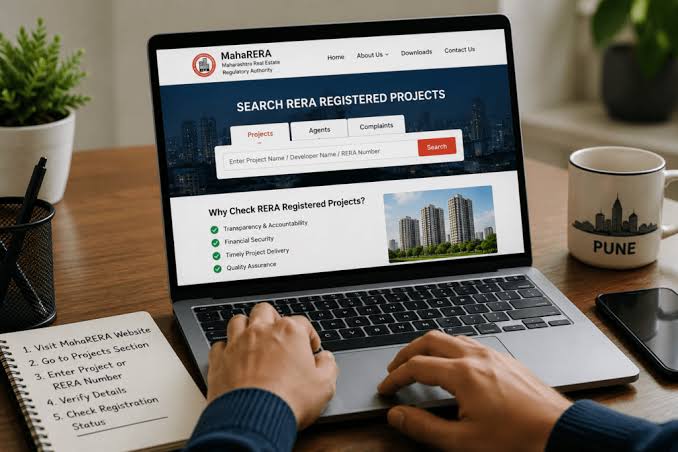
Step 1: Find Your State’s Official RERA Portal
Real estate regulation in India operates at the state level, so your first step depends entirely on where the project is located.
- Each state and union territory maintains its own dedicated RERA authority and website — MahaRERA for Maharashtra, UP RERA for Uttar Pradesh, Karnataka RERA, and so on
- Confirm you’re on the genuine official site by checking that the URL ends in “.gov.in” — fake, lookalike portals designed to mislead buyers do exist
- Search for “[your state] RERA official website” directly rather than clicking a link shared by a broker or developer, to avoid landing on an unofficial or manipulated version of the page
- The official portal’s homepage typically has a prominently placed search or “Registered Projects” section, so you shouldn’t need to dig through multiple pages to start verifying
Step 2: Search Using the RERA Registration Number
Once on the correct portal, several search methods work, but one is meaningfully more reliable than the rest.
- Searching by the RERA registration number itself is the most accurate method, since project and developer names can be similar or duplicated across different, unrelated projects
- Searching by project name requires entering the exact, complete name with correct spelling to reliably return the right result
- Searching by developer or promoter name is genuinely useful beyond just finding one project — it lets you review that developer’s broader track record across every project they’ve registered
- Searching by location or district lets you browse all RERA-approved projects in an area you’re considering, useful when comparing multiple options rather than verifying one specific project
Step 3: What the Registration Number Format Actually Tells You
The RERA number itself isn’t just a random string — it’s structured, and understanding the format helps you sanity-check what a developer has told you.
- The typical format follows a pattern of State Code, Authority, Project Type, Year, and a Sequential Number
- This means the number embeds the registration year directly, letting you cross-check whether a “newly launched” project’s registration date actually matches what marketing materials claim
- A registration number that doesn’t match the expected format for that state, or that a developer is reluctant to provide clearly, is itself worth treating as a red flag before proceeding further
Step 4: Checking the Details That Actually Matter
Once you’ve located the correct project page, several specific fields deserve real attention rather than a quick glance.
- Approved layout plans and specifications — confirming what’s actually been sanctioned matches what’s being marketed to you, since discrepancies here can signal a project selling ahead of full approval
- Land title documents — verifying the developer genuinely holds clear title to the land the project sits on
- Promoter and developer details — including their track record across other registered projects, useful for spotting a pattern of delays or complaints before committing
- Quarterly progress updates — RERA requires developers to regularly update construction status, giving you an independently verifiable read on whether a project is genuinely on schedule
- Completion timeline and approval validity — checking the officially registered completion date against whatever date you’ve been verbally promised by a sales team
Understanding the 70% Escrow Account Protection
This specific financial safeguard is one of RERA’s most consequential protections, and it’s worth understanding precisely rather than just knowing it exists.
- Developers are legally required to deposit 70% of funds collected from buyers into a separate, project-specific escrow account
- These escrowed funds can only be used for the construction and land costs of that specific project — not diverted toward another development or unrelated business expense
- Withdrawals from this escrow account require certification from engineers, architects, and Chartered Accountants, confirming the withdrawal corresponds to genuine, completed construction progress
- This mechanism directly addresses one of the most common pre-RERA fraud patterns, where buyer funds collected for one project were diverted to fund a developer’s other, unrelated projects, leaving the original project stalled
Checking for Delays and Extension History
Beyond the current registration status, the portal often reveals whether a project has already run into trouble.
- Many state portals, including UP-RERA, specifically track and display project extension certificates — formal requests a developer has filed to push back their original completion timeline
- A project with a documented history of extensions is a meaningful signal worth factoring into your decision, even if the current registration status shows as active and compliant
- If a developer delays possession beyond the registered timeline, RERA mandates compensation to affected buyers, commonly cited at roughly 9.45-10.75% annually on the amount paid — a concrete, enforceable financial protection rather than a vague promise
- Checking this history before booking, rather than only after experiencing a delay yourself, gives you a much clearer picture of what to realistically expect from that specific developer
When a Project Isn’t RERA-Registered At All
Not every project falls under mandatory registration, and understanding this exemption matters for buyers considering smaller developments.
- Under Section 3 of RERA, a promoter must register a project before advertising, marketing, booking, or selling any unit — selling units in a project that should be registered but isn’t is illegal
- Projects with a land area under 500 square meters may fall outside mandatory registration requirements, depending on the specific state’s threshold
- Even for a project genuinely exempt from registration, buyers should exercise the same level of caution around legal due diligence, since exemption from RERA doesn’t mean exemption from the underlying legal and title risks a larger project would otherwise have disclosed through the registration process
- If a project of meaningful size claims exemption from RERA, that claim itself deserves independent verification rather than simply being taken at face value
A Practical Verification Checklist Before Booking
Pulling this into an actual routine worth following before any financial commitment.
- Locate the project on your state’s official “.gov.in” RERA portal, searching by registration number specifically for the most reliable match
- Cross-check the registered completion timeline, approved plans, and promoter details against everything you’ve been told verbally or shown in marketing materials
- Review the developer’s broader track record by searching their name, checking for patterns of delays or extensions across their other registered projects
- Never make a booking or payment based solely on advertisements or verbal assurances — always verify the underlying details directly through the official portal first
- Keep both digital and physical copies of everything you’ve verified, since project timelines and details can shift, and having your own dated record protects you if a dispute arises later
This is general educational information about verifying RERA project details, not legal advice. Specific portal features and requirements vary by state, and consulting a property lawyer for a thorough legal review is advisable before making any significant real estate commitment.
FAQs
Q1. Is it enough to just confirm a project has a RERA registration number, or should I check more?
A: Checking further matters considerably — the registration number alone only confirms a project is registered, while reviewing the approved plans, promoter track record, and quarterly progress updates on the portal reveals whether the project is genuinely on track and compliant.
Q2. What happens if a developer delays possession beyond the RERA-registered timeline?
A: RERA mandates compensation to affected buyers, commonly cited at roughly 9.45-10.75% annually on amounts paid, giving buyers an enforceable financial remedy rather than relying purely on the developer’s goodwill.
Q3. How can I tell if a RERA portal I’m using is genuine and not a fraudulent lookalike?
A: Confirm the website’s URL ends specifically in “.gov.in,” and access it by searching directly for your state’s official RERA authority rather than clicking a link shared by a broker or developer.
Q4. Does every real estate project in India need to be RERA-registered?
A: No. Projects with a land area under roughly 500 square meters may be exempt in some states, though buyers should still exercise thorough legal due diligence even on projects claiming this exemption.