Here’s a scenario that plays out in insurance offices across India every single week: a business owner files a claim after water damages their office equipment, only to be told their policy doesn’t cover it. The premium was paid on time, the policy was active, and yet the claim gets rejected. Nine times out of ten, the reason traces back to one thing, they had a specific peril policy and assumed it worked like a broader one.
Understanding what “specific peril” actually means in your insurance policy isn’t some technical detail you can skip past while signing paperwork. It directly determines whether your claim gets paid or bounced back with a polite rejection letter. For homeowners, business owners, and anyone buying property or asset insurance in India, this single concept quietly shapes what you’re actually protected against.
What Exactly Is a Peril in Insurance
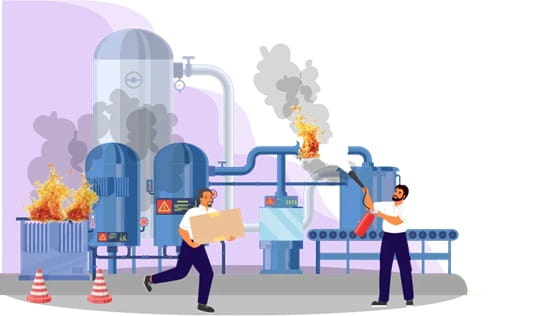
Before getting into “specific” perils, it helps to understand what a peril even means. In plain terms, a peril is the actual cause of a loss, the event that damages or destroys whatever you’ve insured. Fire is a peril. Theft is a peril. A cyclone is a peril. It’s the “what happened” behind any insurance claim.
This is different from a hazard, which is a condition that increases the likelihood of a peril occurring. If your warehouse stores flammable chemicals, that’s a hazard, it doesn’t cause damage by itself, but it raises the odds that a fire, the actual peril, will eventually happen and cause serious loss.
So What Does “Specific Peril” Actually Mean
A specific peril policy, also called a named perils policy, covers your property only against risks that are explicitly listed in the policy document. If an event isn’t named, it simply isn’t covered, no matter how reasonable or unfortunate the loss might seem.
Think of it as a checklist. Your policy might specifically list fire, lightning, explosion, and theft as covered perils. If your property gets damaged by any of these named events, you get compensated. But if damage happens because of something not on that list, say, a burst internal pipe flooding your office, or a landslide affecting your warehouse, you’re simply out of luck unless you’ve added specific coverage for it separately.
Specific Peril Versus All Risk: The Core Difference
This distinction matters enormously, and it’s exactly where most confusion and claim disputes come from. A specific peril policy tells you what IS covered. An all-risk policy, by contrast, tells you what ISN’T covered, everything else is presumed protected.
Here’s where it gets genuinely important for anyone filing a claim. Under a specific peril policy, the burden of proof sits with you, the policyholder. You have to demonstrate clearly that your loss was actually caused by one of the perils named in your policy. If the cause is ambiguous, or involves overlapping factors, this can turn into a real point of dispute with your insurer.
Under an all-risk policy, that burden flips entirely. The insurer has to prove that your specific loss falls under an explicit exclusion in order to deny your claim. This single difference in who has to prove what is often the deciding factor in whether a borderline claim gets settled smoothly or turns into a prolonged argument.
Where Specific Peril Policies Show Up Most in India
The most widely used specific peril policy for commercial property in India is the Standard Fire and Special Perils Policy, commonly referred to as SFSP. It’s standardised under IRDAI guidelines across insurers, and it typically covers a defined list of perils, fire, lightning, explosion, storm, flood, riot, strike, and a handful of other named events.
This policy has genuinely served countless Indian businesses well for decades, largely because it’s predictable, affordable, and well understood by insurers and surveyors alike. But its limitation shows up exactly when something happens that isn’t on that list. Accidental damage during internal equipment relocation, water seepage from an internal plumbing failure, these kinds of losses simply won’t get paid under a standard SFSP policy unless you’ve specifically extended coverage to include them.
Beyond property insurance, named perils structures also commonly appear in employment practices liability policies and certain cyber insurance products, where insurers prefer to clearly define exactly which risks trigger coverage rather than leaving things open-ended.
Why Insurers Prefer Naming Specific Perils in Some Cases
It might seem like insurers would always prefer offering broader, all-risk coverage since it sounds more attractive to sell. In practice, specific peril policies exist because they let insurers price risk more precisely and predictably.
When perils are clearly named, both the insurer and the policyholder know exactly where they stand. This works particularly well for risks that are well understood and quantifiable, like fire or theft, where historical data makes pricing straightforward. It becomes trickier for risks that are harder to define or constantly evolving, which is partly why liability and cyber insurance tend to lean toward broader, all-risk-style wording instead.
The Real Trade-Off: Cost Versus Coverage
Specific peril policies are almost always cheaper than their all-risk counterparts, and this makes sense once you understand why. You’re paying only for protection against a defined, limited set of risks, not for open-ended coverage against anything that might go wrong.
For businesses or individuals with tighter budgets, or for assets where the main risks are genuinely predictable, fire and theft being the obvious concerns for a small retail shop, for instance, a specific peril policy can offer solid, cost-effective protection. The catch is that you need to be honest with yourself about what risks you’re actually exposed to, because if something outside your named list occurs, there’s no fallback.
How to Check What Your Own Policy Actually Covers
The good news is that figuring this out doesn’t require a law degree. Every specific peril policy includes a section, usually labelled something like “Perils Insured Against” or simply listed within the policy schedule, that spells out exactly which events trigger coverage.
It’s worth going through this list carefully rather than assuming your policy behaves like a comprehensive one just because you paid a reasonable premium. If you notice gaps, say, your policy doesn’t cover flood but you’re in a flood-prone area, most insurers let you add specific extensions or riders to close that gap, often at a modest additional premium rather than requiring you to switch to a full all-risk policy.
Frequently Asked Questions
Q1. If my specific peril policy doesn’t list a particular risk, can I add it later without changing my whole policy?
A: Yes, in most cases. Insurers typically allow you to add specific perils as extensions or endorsements to an existing named perils policy, often for an additional premium, without requiring you to switch to a completely different policy type.
Q2. Does a specific peril policy cover partial damage, or only total loss?
A: It covers both, as long as the cause of damage, whether partial or total, falls under one of the perils explicitly named in your policy. The extent of damage doesn’t matter as much as whether the underlying cause is actually listed.
Q3. Why did my claim get rejected even though I thought the cause of damage was obviously covered?
A: This usually happens when the actual cause of loss doesn’t precisely match what’s named in your policy, or when there’s ambiguity about what triggered the damage. Since the burden of proof falls on you under a specific peril policy, insurers can reject claims where the cause isn’t clearly demonstrated to be one of the named perils.
Q4. Is it worth paying more for an all-risk policy instead of sticking with specific peril coverage?
A: It depends on your risk exposure and budget. If your assets face a genuinely wide range of unpredictable risks, or if you simply want fewer surprises during a claim, all-risk coverage offers more peace of mind despite the higher premium. If your risks are limited and well-defined, a specific peril policy can be a perfectly reasonable, more affordable choice.