Picture an Indian exporter shipping a container of textile machinery to Germany. Midway through the voyage, a storm damages the vessel badly enough that it’s still technically afloat, still technically recoverable, but repairing it would cost more than the ship itself is worth. Is that a total loss or not? This exact grey zone is what marine insurance calls “Constructive Total Loss,” and for anyone involved in shipping, exporting, or importing goods by sea, understanding this concept isn’t optional legal trivia. It directly determines whether you get compensated fully or end up arguing with your insurer over a partially damaged cargo that’s technically still “there.”
India moves more than 95% of its trade by volume through shipping, which means constructive total loss isn’t some rare, once-in-a-blue-moon scenario for Indian businesses. Between cyclones in the Arabian Sea, piracy risks along certain routes, and the sheer unpredictability of ocean transit, this concept shows up in claims far more often than people expect. Knowing how it works can be the difference between recovering your full insured value and getting stuck fighting for a fraction of it.
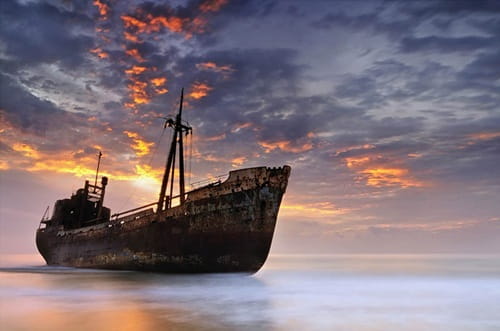
Quick Overview: Constructive Total Loss in Marine Insurance
| Aspect | Detail |
| Governing law in India | Marine Insurance Act, 1963 |
| Key section | Section 60 |
| Core trigger | Recovery or repair cost exceeds the insured value |
| Applies to | Ships (hull), cargo, and goods in transit |
| Required action by insured | Notice of Abandonment |
| Alternative to CTL | Treating the loss as a partial loss instead |
| Difference from Actual Total Loss | ATL is factual destruction; CTL is a legal fiction based on economics |
Understanding the Basic Idea Behind CTL
Constructive Total Loss sits in an interesting middle ground. It’s not that the ship or cargo has vanished or been completely destroyed, that would be an Actual Total Loss instead. CTL applies when the insured property still technically exists, but recovering or repairing it no longer makes economic sense.
Section 60 of India’s Marine Insurance Act, 1963 captures this precisely: there’s a constructive total loss where the insured property is reasonably abandoned because its actual total loss appears unavoidable, or because preserving it would cost more than it would be worth once that expenditure is made. In plain terms, if fixing something costs more than the thing itself is worth, the law treats it as if it were destroyed entirely, even though physically, it might still be sitting there.
The Two Core Scenarios That Trigger CTL
Indian marine insurance law recognises two broad situations under which a constructive total loss can be declared.
The first involves deprivation of possession. If an insured peril, say piracy or a natural disaster, takes the ship or cargo out of your hands, and it’s genuinely unlikely you’ll ever get it back, or getting it back would cost more than it’s worth once recovered, that qualifies as CTL. A classic example here involves pirates seizing a vessel and its cargo, with negotiations for release dragging on with no clear resolution in sight.
The second scenario involves damage rather than disappearance. If the ship or cargo is severely damaged by an insured peril, and repairing it to a usable condition would cost more than its value once repaired, that also counts as constructive total loss. A ship battered badly in a storm, technically still floating, but with repair costs exceeding what the vessel is actually worth, falls squarely into this category.
Why “Abandonment” Matters So Much in This Process
Here’s where marine insurance gets genuinely distinctive compared to most other insurance types. To claim a constructive total loss, the insured generally needs to formally abandon the property to the insurer through something called a Notice of Abandonment.
This isn’t just a formality. By abandoning the ship or cargo, the policyholder essentially hands over whatever rights and residual value remain in that property to the insurer, in exchange for receiving the full insured value as compensation. If the insured instead wants to keep whatever’s left of the damaged property, they can choose to treat the loss as merely a partial loss rather than pursuing the full constructive total loss route, though that typically means a smaller payout tied to the actual extent of damage rather than the full insured sum.
Importantly, insurers are within their rights to refuse a notice of abandonment if they don’t believe the situation genuinely qualifies as CTL. That refusal, however, doesn’t strip the insured of their underlying right to pursue a claim under the policy; it just means the specific abandonment route gets contested, sometimes ending up before a court or arbitrator to settle.
How CTL Plays Out for Cargo Versus Ships
The underlying principle stays the same whether you’re insuring a vessel itself, called hull insurance, or the goods being transported inside it, called cargo insurance, but the practical examples look a little different.
For cargo, imagine a company shipping engineering equipment from India to Sri Lanka, only for the vessel to be seized by pirates en route. If there’s genuine uncertainty about ever recovering that shipment despite government and local authority involvement, insurers often treat this as a constructive total loss and settle the claim in full, rather than making the exporter wait indefinitely for a resolution that may never come.
For hull insurance, a real-world scenario that’s often cited involves a vessel captured by pirates that later suffered mechanical damage during captivity, an engine failure and generator explosion eventually leading to the ship sinking. Since the cost of recovering and repairing such a vessel far exceeded its total value, insurers settled it as a constructive total loss rather than pursuing an expensive, uncertain salvage operation.
How Insurers Determine the Threshold
There’s no single universal percentage written into the Marine Insurance Act itself dictating exactly when repair costs “exceed” value, since Section 60 focuses on the underlying economic logic rather than a fixed numeric cutoff. That said, insurers commonly reference the point where repair or recovery costs cross a substantial portion of the item’s insured or market value, sometimes cited informally around the 50 to 60% mark for cargo, though the actual determination happens case by case through survey reports and expert assessment rather than a rigid formula.
This is also where the fine print of your specific policy matters enormously. India’s Supreme Court, in the Peacock Plywood case, made clear that if a marine insurance policy’s own wording differs from what Section 60 lays out generically, the specific policy terms take precedence over the general statutory provision. In practice, this means two businesses with seemingly similar cargo losses could see different outcomes depending on exactly how their individual policies define and handle constructive total loss.
What the Claims Process Typically Looks Like
Once a loss occurs, the insured needs to notify the insurer promptly, since delay can complicate the claim considerably. Insurers then typically appoint a licensed surveyor to assess the extent of damage and estimate recovery or repair costs against the item’s insured value.
Supporting documentation matters heavily here, things like the original insurance policy, survey reports, bills of lading, commercial invoices showing cargo value, and any correspondence regarding attempted recovery efforts. Based on the surveyor’s findings and this documentation, the insurer classifies the situation as either a constructive total loss, an actual total loss, or a partial loss, and settlement proceeds according to whichever category applies.
Frequently Asked Questions
Q1. If my cargo is stolen by pirates but there’s still a chance of recovery, can I immediately claim constructive total loss?
Not immediately, no. Insurers typically wait to see whether recovery genuinely appears unlikely or unreasonably costly before agreeing to treat it as CTL. If there’s active negotiation underway with a realistic chance of recovery within a reasonable timeframe, the claim might initially be handled differently until that uncertainty resolves one way or another.
Q2. What happens if I don’t formally abandon the property but still want to claim a total loss
Under Indian marine insurance law, formally treating the loss as constructive total loss generally requires abandonment through a Notice of Abandonment. Without it, you may still have the option to claim for a partial loss, but you’re less likely to recover the full insured value the way a properly executed CTL claim would allow.
Q3. Can an insurer reject my notice of abandonment, and what happens if they do?
Yes, insurers can refuse to accept a notice of abandonment if they believe the situation doesn’t genuinely meet the threshold for constructive total loss. This refusal doesn’t cancel your right to claim under the policy altogether; it typically means the dispute over classification gets resolved through further negotiation, arbitration, or litigation.
Q4. Does the Marine Insurance Act specify an exact percentage for when repair costs count as “exceeding” the ship’s value?
No, the Act itself doesn’t set a fixed numeric threshold. It focuses on the broader economic principle that if the cost of recovery or repair exceeds the value once that expenditure is incurred, it qualifies as constructive total loss, with the specific determination made through survey assessments and, ultimately, the wording of your individual policy.