Let’s be honest — most “business advice” in India still assumes you either have a fat savings account or a relative willing to hand over capital. Neither situation describes most aspiring entrepreneurs in their twenties and early thirties right now. What actually describes them is a smartphone, an internet connection, a genuine hunger to build something, and somewhere between Rs. 30,000 and Rs. 1 lakh sitting in a savings account.
The good news is that 2026 is probably the best time in Indian history to convert that small pool of money into a real, functioning business. India crossed 850 million active internet users earlier this year. UPI crossed 18 billion monthly transactions. Meesho now ships to over 99 percent of serviceable pincodes. The infrastructure to run a lean, digital-first, or neighbourhood-based business has genuinely never been more accessible. You do not need to rent a shop, hire staff, or invest in expensive equipment in the first year of most of the ideas below. What you need is clarity on where to start and the discipline to treat it like a business from day one, not a side hobby.
Here are five businesses that real people in India are building right now on budgets below Rs. 1 lakh — not theoretical possibilities, but verified models with trackable earning potential.
1. Tiffin and Home-Cooked Meal Service
Estimated startup cost: Rs. 15,000 – Rs. 40,000 Monthly earning potential: Rs. 25,000 – Rs. 70,000
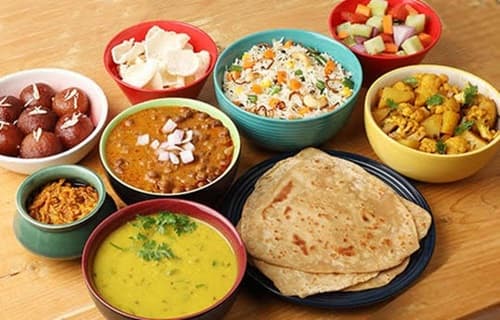
India’s urban rental belt has a hunger problem that no app has fully solved. Zomato and Swiggy are great for weekends and cravings, but office workers and students living away from home are increasingly moving back toward reliable, affordable, hygienic home-cooked food delivered every single day. That shift has quietly made tiffin services one of the most consistently successful small businesses across Indian Tier-1 and Tier-2 cities in 2026.
The economics are clean. Your investment goes toward a commercial-grade pressure cooker, stainless steel tiffin containers, an insulated delivery bag, and your first two weeks of grocery supplies. That is your entire setup. You start with eight to ten customers, you cook from your own kitchen, you deliver yourself or use a local delivery boy on a commission basis. The margins are strong because you are selling daily necessity at a fixed monthly rate — typically Rs. 2,500 to Rs. 3,500 per customer per month for two meals per day — and food costs stay predictable once you are purchasing in weekly bulk.
The key difference between tiffin services that grow and those that stall is always the same thing: consistency in quality and timing. Customers who are paying monthly want to know that at 12:30 PM their tiffin arrives. Build that reliability in the first month and word-of-mouth becomes your primary marketing channel. Most successful tiffin operators in cities like Pune, Bengaluru, and Ahmedabad started with fewer than fifteen customers and scaled to eighty to a hundred within eighteen months purely through referrals.
With Rs. 1 lakh you have enough to start, absorb the first month’s running costs, and invest in simple WhatsApp Business marketing to find your first customers in your residential society or office area.
2. Digital Marketing Services for Local Businesses
Estimated startup cost: Rs. 10,000 – Rs. 30,000 Monthly earning potential: Rs. 30,000 – Rs. 1,00,000+
Here is a situation playing out in every Indian city in 2026. A salon owner in Rajouri Garden, a restaurant in Coimbatore, a boutique in Surat — each has a functional business, a basic Instagram account with forty followers, and absolutely no idea how to grow it. They know they need to be online. They do not know what to post, when to post, or how to run a Meta ad. They cannot afford a full-time marketing employee. And they will pay Rs. 8,000 to Rs. 15,000 per month to someone competent who can handle it for them.
This is the actual market for digital marketing services at the small business level in India in 2026, and it is genuinely enormous. Unlike corporate digital marketing which requires complex tools and big teams, local business social media management requires a phone, a basic Canva subscription (under Rs. 4,000 annually), Meta Business Suite, and the ability to write clear, engaging content in Hindi or English.
Your startup cost with this model is almost nothing. A laptop if you do not already own one, a decent internet connection, and possibly a short Meta advertising certification course available for free or under Rs. 2,000 online — that is your entire capital requirement. You take on your first two clients at reduced rates, build a portfolio with real results, and then pitch at full price. Most digital marketing freelancers in Tier-2 cities hit three to four clients within six months and are earning Rs. 40,000 to Rs. 60,000 monthly before the end of the first year.
The work-from-home nature of this business means your overhead remains zero even as your income grows, which produces unusually clean profit margins compared to most other business models at this investment level.
3. Online Reselling via Meesho, Amazon, and Instagram
Estimated startup cost: Rs. 15,000 – Rs. 50,000 Monthly earning potential: Rs. 20,000 – Rs. 60,000
Online reselling has matured significantly in India. It is no longer just about selling clothes from your wardrobe — it is a structured business model where you source products from wholesale markets in Surat, Jaipur, Delhi’s Sadar Bazaar, or directly from manufacturer listings on IndiaMART, and sell them at retail margins through Meesho, Amazon, Flipkart, or a curated Instagram presence.
The categories generating the most consistent returns for small resellers in 2026 are women’s ethnic wear, home decor, stationery and gifting items, and kitchen tools. These are not fashion-sensitive categories that go out of style — they move continuously because they serve genuine daily demand rather than trend-based impulse purchases.
Your investment in this model goes toward your initial inventory, packaging material, a basic product photography setup (which can be as simple as a white bedsheet, natural light, and your phone), and a small Meta advertising budget to seed your first Instagram sales. The inventory risk is genuinely manageable because you start by ordering small batches — sometimes as few as ten to twelve units per SKU — testing what sells before committing to larger volumes.
What separates successful resellers from struggling ones in 2026 is not the product selection — it is the Instagram content quality. Buyers on social commerce buy the aesthetic before they buy the product. Investing two to three hours per week in learning basic Reels editing and styled product photography genuinely determines whether your store builds an audience or stays invisible.
4. Customised Print Products Business
Estimated startup cost: Rs. 30,000 – Rs. 70,000 Monthly earning potential: Rs. 20,000 – Rs. 55,000
The gifting economy in India is expanding rapidly. Personalised mugs, phone cases, cushion covers, photo frames, and printed T-shirts are being ordered for birthdays, weddings, office farewell gifts, and corporate events every week in every city. The demand is consistent, the margins are strong, and the production technology has become genuinely affordable.
A basic heat-press printing machine costs between Rs. 12,000 and Rs. 25,000 depending on size and brand. A sublimation printer with ink and paper runs another Rs. 15,000 to Rs. 20,000. Blank products — mugs, cushions, T-shirts — are sourced at wholesale prices. With Rs. 60,000 to Rs. 70,000 you can set up a fully functional print-on-demand home studio producing customised products at genuinely competitive quality.
Orders come from multiple channels simultaneously — Instagram, local school and college WhatsApp groups, corporate gifting inquiries, and platforms like Etsy or Qikink for wholesale fulfillment. Corporate bulk orders are particularly valuable because one office event of two hundred employees producing Rs. 250 per customised mug is Rs. 50,000 in a single order. Building a reputation in one apartment complex’s WhatsApp group alone can sustain the business for months.
5. Freelance Content and Copywriting Services
Estimated startup cost: Rs. 5,000 – Rs. 20,000 Monthly earning potential: Rs. 25,000 – Rs. 1,00,000+
India’s digital economy produced a visible content shortage in 2025 and 2026. Every funded startup, every D2C brand, every consulting firm, every educational platform needs — blogs, product descriptions, email sequences, LinkedIn posts, ad copy, and website content — constantly. The supply of genuinely good writers who can deliver on brief without requiring extensive editing is far smaller than the demand.
If you can write clearly, structure arguments logically, and meet deadlines, this is the highest-margin business on this entire list. Your startup cost is essentially a portfolio website (Rs. 3,000 to Rs. 5,000 for a simple WordPress or Wix setup) and your first three writing samples — which you can create speculatively, without a paying client, by writing for hypothetical brands in a niche you know well.
The pitch process for Indian content clients in 2026 is primarily via LinkedIn, cold email to company content managers, and marketplace profiles on Upwork and Fiverr. A writer producing ten to fifteen pieces of content monthly for two or three retainer clients can comfortably cross Rs. 50,000 per month within six to eight months, with zero recurring cost structure beyond their internet connection.
The ceiling on this business is significantly higher than the others on this list because it scales without additional capital — more clients simply mean more time commitment, not more investment.
Final Thought
Every business on this list works. None of them require luck, connections, or a breakthrough product idea. What they require is execution, consistency in the first six months when income feels fragile, and the decision to treat the venture as a serious business from week one rather than a test you can walk away from. India’s economy is actively rewarding people who do exactly that right now.
Frequently Asked Questions
Q1. Can I really start a business in India with less than Rs. 1 lakh?
A: Yes, absolutely. Several profitable businesses including tiffin services, digital marketing, and freelance writing can be started with Rs. 10,000 to Rs. 50,000. The key is choosing a model where your skills reduce your capital requirement.
Q2. Which business from this list earns the fastest?
A: Tiffin services generate daily cash flow from the first week. Freelance content writing can also produce first earnings within two to three weeks of pitching clients actively.
Q3. Do I need GST registration to start these businesses?
A: Businesses with annual turnover below Rs. 20 lakh generally do not require GST registration. Food businesses should obtain an FSSAI basic registration, which costs under Rs. 500 annually and is straightforward to apply for online.
Q4. Which of these businesses can I run from home?
A: All five can be run from home, at least in the startup phase. Digital marketing, reselling, content writing, and print-on-demand products are particularly well-suited to home-based operations with no need for a separate commercial space.
Q5. How long does it take to break even on a sub-1-lakh business?
A: Most well-executed service businesses break even within two to three months. Product-based businesses like reselling or customised printing typically recover initial investment within three to five months depending on sales volume and marketing effort.