₹50 lakh is enough capital in India’s 2026 market to step into an already-proven business rather than building one from nothing — and that distinction matters more than the number itself. At this budget level, franchising becomes genuinely the dominant strategy for good reason: you’re not gambling on whether a business model works, you’re buying into one that’s already been tested across dozens or hundreds of other locations, complete with brand recognition, training systems, and an existing customer base that would otherwise take years to build independently.
1. Car Detailing and Auto Care Franchise
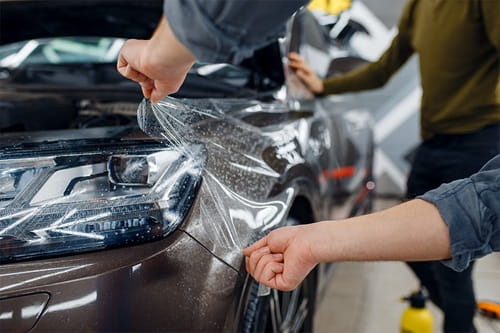
Car detailing has emerged as one of the strongest franchise opportunities within the ₹50 lakh bracket, driven by rising vehicle ownership and growing consumer willingness to pay for professional-grade care and paint protection rather than basic washing services. This category combines genuinely high margins with a comparatively short payback period compared to many other franchise sectors, reflecting both strong demand growth and the relatively controlled operating costs involved once the initial equipment and facility investment is made.
The appeal here goes beyond just profitability — car care demand is structurally growing as India’s middle class continues expanding and vehicle ownership rises, giving this category a genuine tailwind that many more mature, saturated franchise sectors simply don’t have anymore.
2. Beauty and Wellness Salon Franchise
The beauty and wellness sector represents one of the most consistently recommended franchise categories in the ₹20-50 lakh bracket, with established, widely recognized brands offering structured partnership opportunities backed by strong existing brand loyalty. This industry genuinely merges profitability with a service people increasingly view as routine self-care rather than an occasional indulgence, giving it recurring, repeat-visit revenue potential that many one-time-purchase businesses lack entirely.
Franchise support in this category typically covers salon design, staff training, and marketing systems, meaningfully reducing the operational learning curve for entrepreneurs entering the beauty industry without prior direct experience running a salon themselves.
3. Apparel and Formal Wear Retail Franchise
Established apparel franchises benefit from a genuinely steady demand cycle driven by weddings, festivals, and formal wear needs — categories that remain perennially strong in India regardless of broader economic conditions, since these occasions simply don’t get postponed the way discretionary spending sometimes does. Franchisees typically operate under a well-structured retail model with dedicated support on store design, product training, and marketing, and widespread brand recognition, particularly strong in Tier 2 and Tier 3 cities, meaningfully reduces the local advertising investment you’d otherwise need to build customer awareness from scratch.
This combination of durable seasonal demand and reduced marketing burden makes apparel franchising a genuinely lower-risk entry point for entrepreneurs specifically interested in retail but wary of building brand recognition independently.
4. Healthcare and Diagnostic Franchise
Healthcare-related franchises occupy a genuinely resilient position within the ₹50 lakh investment bracket, since franchises offering essential services — diagnostics, wellness, and healthcare more broadly — tend to maintain profitability even during broader economic downturns, unlike more discretionary retail or entertainment categories. This resilience stems directly from the non-negotiable nature of health-related spending, which households continue prioritizing even when cutting back elsewhere.
At this higher investment tier compared to the smaller diagnostic labs viable at ₹20 lakh, you can invest in more comprehensive equipment, a broader testing menu, and stronger facility infrastructure — genuinely differentiating your service from smaller, more limited local competitors.
5. Logistics and Courier Franchise
E-commerce growth across India continues driving rapid expansion in courier and logistics franchise opportunities, positioning this category among the faster-growing segments within the broader Indian franchise landscape. A ₹50 lakh investment at this level typically supports a more substantial operational footprint — vehicles, warehouse or sorting facility space, and staffing — compared to the smaller-scale logistics operations viable at lower budget tiers, letting you serve a meaningfully larger service area and customer base from launch.
This category benefits directly from the same structural e-commerce growth driving demand across nearly every other Indian retail sector, giving logistics franchises a genuinely durable, expanding customer base rather than dependence on a single stagnant market.
Why Franchising Dominates at This Budget Level
Across all five categories, the underlying logic is consistent: at ₹50 lakh, you’re not building a business from scratch — you’re stepping into a proven model with an established brand, ready customer base, and structured operational support, which meaningfully reduces the risk of failure compared to an independent startup attempting to prove the same concept without any of those advantages. The tradeoff, as with any franchise, is ongoing royalty fees and reduced operational flexibility compared to running an entirely independent business, but for most first-time entrepreneurs at this investment level, that structure represents a genuinely reasonable exchange for meaningfully improved odds of success.
The Bottom Line
Car detailing, beauty and wellness, apparel retail, healthcare diagnostics, and logistics all represent genuinely strong franchise categories within India’s ₹50 lakh investment bracket for 2026, each offering proven business models, established brand support, and realistic paths to sustainable profitability. The right choice depends less on which sector sounds most exciting and more on matching the franchise’s specific operational demands — hands-on service delivery, retail management, healthcare compliance, or logistics coordination — to your own genuine strengths and interests.
FAQs
Q1. Is franchising genuinely a safer investment than starting an independent business with ₹50 lakh?
Generally yes — franchises come with a tested business model, established brand recognition, and structured training and support systems that meaningfully reduce the risk of failure compared to proving an entirely new concept independently. That said, franchise success still depends heavily on location quality, daily operational management, and staff training, so the franchise model reduces risk without eliminating it entirely.
Q2. How long does it typically take to break even on a ₹50 lakh franchise investment?
Most franchise businesses achieve break-even within 6 to 24 months, though the exact timeline depends considerably on location quality, sector, franchisor support quality, and how effectively you manage daily operations from launch. Categories with shorter payback periods, like car detailing, tend to reach profitability faster than sectors requiring more extensive facility buildout, like healthcare diagnostics.
Q3. Which of these five franchise categories is most resilient during an economic downturn?
Healthcare and diagnostic franchises tend to show the strongest resilience during downturns, since health-related spending is generally non-discretionary and households continue prioritizing it even when cutting back elsewhere. Beauty and wellness services can see some pullback during tighter economic periods, though routine, lower-cost services within that category tend to hold up better than premium, occasional treatments.
Q4. Do I need prior industry experience to successfully run a franchise in one of these categories?
Not necessarily — established franchisors typically provide structured training, standard operating procedures, and ongoing operational support specifically designed to help entrepreneurs without direct prior industry experience succeed. That said, having some genuine interest or adjacent experience in your chosen category still meaningfully improves your odds, since day-to-day franchise management still requires real hands-on decision-making that training alone can’t fully replace.