Double your budget from ₹1 lakh to ₹2 lakh, and something genuinely changes about what’s possible — you cross from purely service-based, laptop-only ventures into territory where basic manufacturing equipment, a small niche cloud kitchen, or a genuinely stocked repair business becomes realistic. That extra headroom matters. Here are five ideas that specifically make sense at this investment level in 2026, each with real earning potential backed by current market demand.
1. Paper Bag and Eco-Friendly Packaging Manufacturing
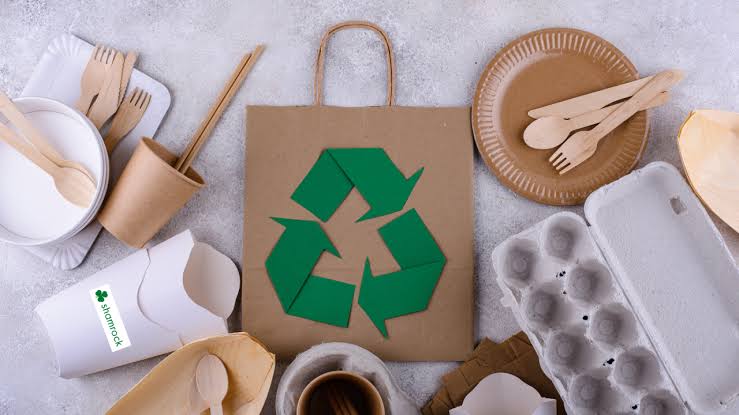
Green compliance mandates across Indian states have created genuine, recurring demand for eco-friendly packaging as businesses shift away from single-use plastic under regulatory pressure. A basic semi-automatic paper bag manufacturing setup typically requires an investment in the ₹75,000 to ₹2 lakh range, putting it squarely within this budget while offering strong bulk B2B order potential and low per-unit production cost that translates into genuinely healthy margins.
Using recycled kraft paper as your primary material keeps input costs low while reinforcing the eco-friendly positioning that’s driving demand in the first place. This business also scales naturally — starting manual and upgrading to semi-automatic or fully automated production as orders grow, rather than requiring a large capital commitment upfront before you’ve proven demand.
2. Niche Cloud Kitchen
Cloud kitchens eliminate the need for expensive dine-in space entirely, letting you operate from a small kitchen setup while partnering directly with food delivery platforms to reach customers. A well-run cloud kitchen focused on a specific niche — healthy meal options, a regional cuisine underrepresented in your area, or a particular dietary focus — can genuinely differentiate itself in an increasingly saturated urban food delivery market rather than competing head-on with established generalist options.
Real revenue figures back this up: a cloud kitchen in a major metro processing 70-100 orders daily can generate ₹2-4 lakh in monthly revenue, with net profit commonly landing in the ₹1.5-2.5 lakh range depending on your specific margins. You’ll need to budget for FSSAI licensing, GST registration, and local municipal health and trade licenses as non-negotiable compliance costs within your overall ₹2 lakh setup budget.
3. Print-on-Demand and Personalized Gifting
Personalized products — custom t-shirts, mugs, journals, and gifting items — represent a genuinely booming niche, particularly among Gen Z consumers, college students, fandoms, and remote workers who value individual expression over generic mass-market products. The core investment here covers basic design tools and platform setup, and profit margins commonly run 40-60% per product depending on your specific niche and target audience.
What makes this business genuinely accessible at this budget level is that established print-on-demand platforms handle inventory and logistics entirely on your behalf — you focus purely on design and marketing while the platform manages printing, fulfillment, and shipping. This removes one of the biggest traditional barriers to product-based businesses: holding physical inventory before you’ve made a single sale.
4. Digital Marketing Agency With a Small Team
Where a solo digital marketing freelancer can start under ₹50,000, stepping up to a ₹2 lakh budget lets you build a small, genuinely capable team from the outset — covering a few months of basic salaries or freelance contractor payments alongside better software tools, paid ad testing budgets, and a more professional client-facing setup. This positions you to take on more substantial client retainers than a solo operator typically can, since businesses increasingly want a team that can cover content, ads, and analytics simultaneously rather than a single generalist juggling everything.
Digital marketing remains one of the most consistently profitable low-investment categories in India precisely because demand keeps growing faster than the supply of genuinely skilled agencies — nearly every small business now recognizes it needs a stronger online presence but often can’t justify an in-house hire.
5. Specialized Repair and Restoration Services
Moving beyond basic mobile repair, a ₹2 lakh budget lets you invest in more comprehensive equipment covering multiple appliance categories — laptops, home appliances, and specialized restoration work like furniture or electronics refurbishment — alongside a genuinely stocked parts inventory that reduces the frustrating “come back tomorrow” delays that plague under-equipped repair shops. This broader capability lets you capture customers across several repair categories rather than turning away business outside a narrow specialty.
The genuine advantage at this investment level is being able to offer same-day service across a wider range of issues, which builds the kind of reliable local reputation that drives consistent referral business — a genuinely durable competitive advantage in a category where trust and turnaround speed matter more to customers than marketing.
Choosing the Right Fit for Your Budget
Across all five ideas, the extra capital at the ₹2 lakh level should go toward whatever specifically removes your biggest early bottleneck — better equipment for a manufacturing business, a small team for a service business, or broader inventory for a repair operation — rather than being spread thinly across marketing, branding, and equipment simultaneously. Identifying your single biggest constraint and directing most of your budget there tends to produce considerably better early results than trying to do everything reasonably well from day one.
The Bottom Line
Paper bag manufacturing, a niche cloud kitchen, print-on-demand gifting, a small digital marketing team, or expanded repair services all become genuinely more capable and competitive at a ₹2 lakh investment level compared to the bare-bones ₹1 lakh version of the same idea. The right choice depends on whether you’re drawn to hands-on manufacturing, food service, creative product design, client-facing digital work, or technical repair skills — matching the business to your actual strengths matters more than chasing whichever idea sounds most profitable on paper.
FAQs
Q1. Is a cloud kitchen genuinely achievable within ₹2 lakh, given how much equipment and licensing it requires?
It’s tight but achievable if you start with a small, focused menu and basic kitchen equipment rather than trying to offer extensive variety from day one, since a narrower menu reduces both equipment needs and ingredient inventory costs. Budgeting carefully for FSSAI licensing, GST registration, and municipal permits upfront, rather than treating them as afterthoughts, is essential since these compliance costs are non-negotiable and can otherwise eat into your equipment budget unexpectedly.
Q2. Should I hire staff immediately with a ₹2 lakh digital marketing agency budget, or start solo and reinvest profits into a team later?
Starting solo and reinvesting your first few months of client revenue into gradually building a small team tends to be less financially risky than committing to salaries before you’ve secured a stable client base. That said, if you already have strong initial client leads lined up before launching, using part of your ₹2 lakh to bring on one skilled contractor early can help you deliver a broader service range from the start and win larger retainer clients sooner.
Q3. How do I know if paper bag manufacturing has genuine demand in my specific area before investing in equipment?
Reaching out directly to local retailers, restaurants, and small businesses currently using plastic packaging to gauge their interest in switching, along with checking your state’s specific plastic ban enforcement timeline, gives you a much clearer picture of real local demand than assuming based on general trends. Many states have staggered enforcement of single-use plastic restrictions, so understanding your specific region’s current and upcoming regulations helps you time your entry into this business more effectively.
Q4. Which of these five ideas has the lowest ongoing risk if the business doesn’t perform as expected?
Print-on-demand and digital marketing services carry the lowest ongoing risk, since neither requires holding physical inventory or committing to fixed equipment that loses value if the business doesn’t work out — you can pause or pivot with minimal sunk cost. Paper bag manufacturing and cloud kitchens carry more risk given the equipment and licensing investment involved, though both also offer stronger recurring revenue potential once established, so the tradeoff is between lower risk and potentially higher long-term reward.