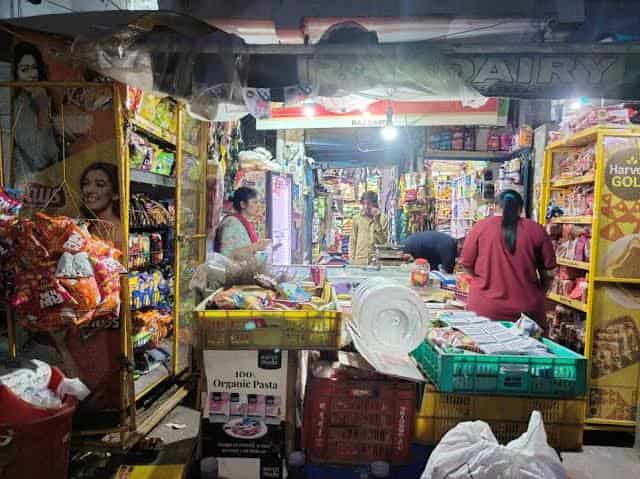
Is a kirana store legal without business registration? That question has probably crossed the mind of every shopkeeper who set up a small grocery counter, started selling, and only later wondered whether they’d skipped something important. The honest answer isn’t a flat yes or no — it depends entirely on which “registration” you’re talking about.
A kirana store doesn’t need to be incorporated as a private limited company or LLP to operate legally. A sole proprietorship runs on nothing more than your PAN and a bank account in the shop’s name. But that’s not the whole story. Certain registrations — Shop and Establishment License, FSSAI, GST above a threshold — aren’t optional paperwork you can get around to later. Skip these, and you’re not running a grey-area business; you’re running an illegal one.
What “Business Registration” Actually Means for a Kirana Store
This is where most confusion starts. People hear “register your business” and picture MCA incorporation, company PAN, and a formal entity structure. For a single kirana shop, none of that is required.
A proprietorship is the default structure, and it needs no incorporation whatsoever:
- Your personal PAN doubles as the business PAN
- A current bank account opened in the shop’s trade name
- No registrar filings, no annual returns, no company law compliance
If two people run the shop together, a partnership deed is worth registering, though even that’s not strictly compulsory. An LLP or Pvt Ltd structure is overkill for a single neighbourhood store — that route makes sense only once you’re planning multiple outlets or bringing in outside investors.
So if “business registration” means company incorporation, a kirana store is perfectly legal without it. But that’s not where the legal obligations end.
The Registrations That Actually Are Mandatory
Here’s where owners get caught off guard. Even without incorporating a company, a kirana store still has to comply with several standalone registrations, and each one carries its own penalty for non-compliance.
Shop and Establishment License
Every retail business in India needs this, kirana stores included. It regulates working conditions, employee terms, and operating hours, and most states require you to apply within 30 days of starting operations. The exact timeline shifts by state, but the obligation doesn’t disappear just because your shop is small.
Operating without it isn’t a minor lapse — it’s a direct violation of state law, and it attracts fines. It also matters practically: banks often ask for this license as proof the business exists before they’ll open a current account, and some states require it as supporting documentation for GST registration.
FSSAI Registration
If your kirana store sells any packaged or processed food — biscuits, spices, oils, snacks, dairy — FSSAI registration is compulsory, not optional. This isn’t unique to restaurants or food trucks; any shop dealing in food items falls under FSSAI’s scope.
Worth knowing here: sources disagree on the exact turnover slab for FSSAI Basic Registration, with figures ranging from ₹12 lakh to ₹1.5 crore depending on the source and when it was published. Rather than relying on a fixed number, check the current threshold directly on the FOSCOS portal before applying, since these limits do get revised.
GST Registration — Only Above a Threshold
This is the one registration that’s genuinely conditional. GST registration becomes mandatory once your annual turnover crosses ₹40 lakh in most states, or ₹20 lakh in special category states. Below that, registration is optional.
But two situations override the threshold completely, regardless of turnover:
- Selling through an e-commerce platform or quick-commerce partner
- Making any inter-state supply
Cross either line, and GST registration becomes compulsory from day one, even if your annual sales are nowhere near the standard threshold.
What Happens If You Skip These Registrations
Running a kirana store without the mandatory licenses isn’t a quiet risk that stays invisible forever. Municipal inspectors, FSSAI officers, and labour department staff do conduct checks, especially in urban areas with higher shop density.
The consequences tend to compound rather than stay small:
- Fines under the Shops and Establishment Act, which vary by state but are rarely trivial for a small operator
- Closure notices if repeated non-compliance is flagged
- Inability to open a proper current account, since banks typically ask for the Shop Act license as proof of legitimate business existence
- Blocked access to loans or MSME schemes, most of which require GST or Udyam registration as baseline eligibility
- Difficulty partnering with quick-commerce platforms, which increasingly verify FSSAI and GST status before onboarding local kirana stores for delivery partnerships
That last point matters more each year. As platforms like Blinkit, Zepto, and various ONDC-linked initiatives pull traditional kirana stores into their delivery networks, formal registration stops being just a legal safety net — it becomes the entry ticket to new revenue channels.
Udyam Registration: Not Mandatory, But Worth Doing Anyway
Udyam registration doesn’t fall under “legally required to operate,” but it’s free, paperless, and opens doors that pure compliance registrations don’t. It classifies your kirana store as a Micro, Small, or Medium Enterprise, which can matter when applying for:
- Collateral-free business loans under government MSME schemes
- Priority sector lending benefits from banks
- Subsidies and state-level retail support programmes
It costs nothing and takes minutes online, so there’s little reason to skip it even though it’s not a legal necessity like the Shop Act license or FSSAI registration.
The Real Cost of Getting Compliant
Here’s something worth knowing before you assume registration is expensive or slow: for most single-shop kirana operators, the statutory paperwork is genuinely cheap. FSSAI Basic Registration runs into a few hundred rupees annually depending on the state, Shop and Establishment fees are similarly modest, and GST registration itself is free — the compliance cost shows up later in accounting and filing, not in the registration fee.
The bigger investment in opening a kirana store goes into rent deposits, opening stock, and fixtures — not licensing. Which makes it puzzling how many shop owners delay registration over cost concerns when the actual amount is negligible compared to everything else they’ve already spent on inventory and setup.
FAQs
Q1. Can I run a kirana store legally as an individual without registering a company?
Yes. A sole proprietorship needs no company incorporation — just your PAN and a bank account in the shop’s name. Company registration only becomes relevant if you plan multiple outlets or bring in outside investors.
Q2. Do I need FSSAI registration even if I only sell a few packaged snacks alongside fresh produce?
Yes. FSSAI registration applies to any shop selling packaged or processed food, regardless of how small that portion of your inventory is. Fresh, unpackaged produce alone typically has lighter requirements, but mixed inventory triggers the food license.
Q3. My turnover is well below ₹40 lakh — can I skip GST registration entirely?
Only if you’re not selling through e-commerce platforms and not making inter-state supplies. Either of those triggers mandatory GST registration immediately, overriding the turnover threshold completely.
Q4. What’s the actual risk if I keep operating without a Shop and Establishment License?
You risk direct fines under state law, and repeated non-compliance can lead to closure notices. It also blocks practical things like opening a proper current bank account, which most banks require this license to process.