What causes cryptocurrency prices to rise or fall is rarely one single thing, even though headlines love to pin every move on a single cause — “Bitcoin surges on ETF news” or “crypto crashes on Fed decision.” In reality, prices move because several forces are pulling at once: supply mechanics, institutional money flows, macroeconomic conditions, regulation, sentiment, and leverage all interact simultaneously, and untangling which one mattered most in any given move is genuinely difficult even for professional analysts.
| Quick Facts | Details |
| Bitcoin’s maximum supply | Capped at 21 million coins, a fixed scarcity built into the protocol |
| Dominant 2026 price driver, per industry analysis | Spot ETF flows and institutional allocation, not the halving cycle |
| Historical four-year pattern | Weakened significantly as institutional participation matured |
| Key sentiment gauge | The Fear & Greed Index, tracking overall market mood |
| Major volatility amplifier | Leveraged derivatives positions triggering forced liquidations |
| Macro variables with real influence | Interest rates, inflation data, and US dollar strength |
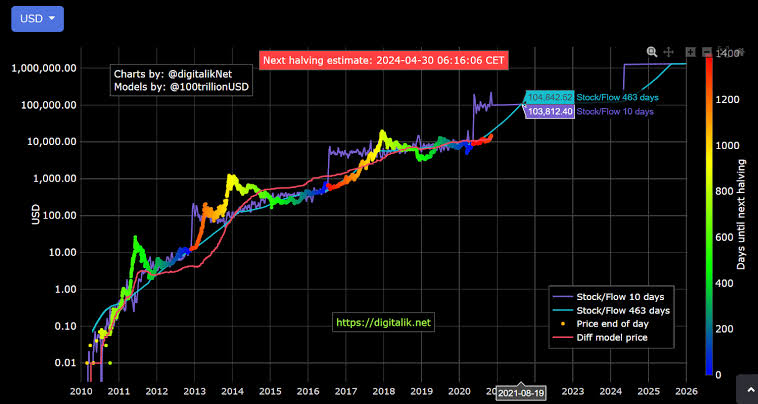
Here’s a genuinely notable shift worth understanding before anything else: Bitcoin halving events — the once-every-four-years supply cut that used to dominate every price narrative — have measurably lost their grip on the market by 2026. Industry analysts increasingly describe the halving’s influence as having “peaked,” with spot ETF flows, institutional allocation, and macro liquidity conditions now doing far more of the work in determining price direction. The old four-year boom-bust pattern that traders relied on for years no longer holds the way it once did, simply because crypto now sits inside a much larger, more interconnected financial system than it did during earlier cycles.
Supply and Demand: The Foundational Mechanic
Underneath everything else, crypto prices still follow the most basic economic principle there is.
- Bitcoin’s supply is hard-capped at 21 million coins, and no authority can increase that number
- The halving event cuts new supply entering circulation by 50% roughly every four years, historically tightening scarcity
- When demand stays steady or grows while new supply shrinks, upward price pressure has historically followed
- Other cryptocurrencies have their own supply mechanics — some capped, some inflationary, some burning tokens to reduce supply over time — and those differences matter for how each asset responds to demand shifts
Institutional Flows and ETFs: The Dominant 2026 Driver
This is the single biggest structural change in how crypto prices move compared to just a few years ago.
- Spot Bitcoin and Ethereum ETFs have become the primary channel through which large institutional money enters and exits the market
- Pension funds, endowments, asset managers, and corporate treasuries increasingly use ETFs and custody arrangements rather than buying crypto directly
- When ETF inflows are strong, that creates persistent, programmatic buying pressure rather than one-off retail speculation
- When macro conditions turn risk-off, ETF outflows can translate directly into selling pressure, since redemptions require the underlying asset to be sold
- This has made crypto prices more sensitive to the same institutional flow dynamics that move traditional markets, rather than behaving as an isolated, retail-driven asset class
Macroeconomic Conditions
Crypto increasingly trades like a risk asset connected to the broader financial system, not a separate universe.
- Interest rate decisions influence how attractive riskier assets like crypto look compared to safer alternatives
- Inflation data and real yield expectations shift investor appetite for holding non-yielding assets
- US dollar strength tends to move inversely with crypto prices, similar to patterns seen in gold and other alternative stores of value
- Broader liquidity conditions across global markets — how freely capital is moving — affect how much money is available to flow into speculative assets like crypto
Regulatory News and Policy Shifts
Announcements from governments and regulators can move prices sharply, sometimes within minutes of a headline.
- Positive regulatory clarity — clearer tax rules, approved investment products, formal legal recognition — tends to reduce uncertainty and support prices
- Restrictive measures — bans, heavy new taxes, or enforcement crackdowns — typically trigger selling pressure
- Uncertainty itself, even without a final decision, can suppress prices simply because investors dislike ambiguity
- Different jurisdictions moving in different directions simultaneously can create genuinely mixed signals for a globally traded asset
Market Sentiment and Behavioral Factors
Beyond the fundamentals, plain human psychology plays a measurable role.
- Fear and greed cycles genuinely amplify price swings beyond what fundamentals alone would suggest
- Social media sentiment and influencer activity can create short-term momentum, particularly in smaller, less liquid coins
- Herd behavior during sharp rallies or crashes tends to exaggerate moves in both directions
- Major news events, even unrelated ones affecting broader risk appetite, can spill over into crypto sentiment quickly given how closely watched the space has become
On-Chain Activity and Network Fundamentals
Because blockchain data is public, analysts can watch certain price-relevant behaviors directly.
- Exchange balances — when large amounts of crypto move off exchanges into private wallets, it often signals long-term holding rather than imminent selling
- Long-term holder accumulation patterns can indicate conviction even during periods of price weakness
- Whale wallet movements — large holders shifting significant amounts — sometimes precede notable price moves, though not always predictably
- Network usage metrics, like active addresses or transaction volume, offer a read on genuine adoption separate from pure price speculation
Leverage, Derivatives, and Liquidation Cascades
This is often what turns an ordinary price dip into a sharp, fast crash — or an ordinary rally into an explosive spike.
- Many traders use leverage, borrowing capital to amplify their exposure beyond what their actual funds would allow
- When price moves against a highly leveraged position, exchanges automatically liquidate it to prevent further losses
- A wave of liquidations in one direction can force additional selling (or buying, in a short squeeze), accelerating the very move that triggered them
- This mechanism explains why crypto price swings often look disproportionately sharp compared to the news event that triggered them — leverage amplifies the initial move mechanically
Putting It Together: Why Prices Move So Fast
No single factor above operates in isolation — that’s really the core takeaway. A single piece of macroeconomic data can shift institutional ETF flows, which changes on-chain exchange balances, which shifts sentiment, which triggers leveraged liquidations, all within the same trading session. Crypto markets never close, so these feedback loops can compound at any hour rather than pausing overnight the way traditional markets do. Understanding this interconnected system matters more for making sense of price action after the fact than for predicting it beforehand — nobody, including professional analysts, reliably calls the timing of these moves in advance.
This is general educational information about the forces influencing crypto prices, not investment advice or a price prediction. Cryptocurrency markets are highly volatile and speculative, and any investment decision should be made with appropriate research and, where needed, professional financial guidance.
FAQs
Q1. Does the Bitcoin halving still affect its price in 2026?
It still matters for long-term supply scarcity, but industry analysis suggests its influence has weakened significantly, with ETF flows and macro conditions now playing a larger role in price direction.
Q2. Why do crypto prices sometimes crash much harder than the news that triggered them?
Leveraged derivative positions amplify moves — when a price shift triggers automatic liquidations, that forced buying or selling accelerates the original move well beyond what the news alone would justify.