The basement is one of the most underutilised assets in Indian residential and commercial real estate — a space that most homeowners either abandon to storage clutter, dampness, and forgotten furniture, or leave locked for years while wishing it served some practical purpose. In 2026, urban India’s rising property costs and the growing cultural acceptance of home-based entrepreneurship have combined to make the basement a genuinely valuable commercial space. A basement in a Bengaluru independent house, a Delhi lajpat nagar building, or a Pune bungalow represents 200 to 800 square feet of usable floor space that you already own and do not pay rent for — and in India’s overpriced commercial real estate environment, that is an asset worth converting into income.
The right basement business in India is defined by three practical constraints: the space must not require high street visibility to generate customers, the business activity must be compatible with limited natural light and ventilation conditions, and the layout must work within the access limitations that most basements impose. These constraints rule out walk-in retail and certain manufacturing operations, but leave open an extraordinarily diverse range of business models that are genuinely suited to below-ground, privately owned spaces. Here are five basement businesses that work specifically well in the Indian urban context.
1. Home Recording Studio and Music Production Setup
Estimated startup cost: Rs. 3 lakh – Rs. 10 lakh Monthly earning potential: Rs. 40,000 – Rs. 2 lakh
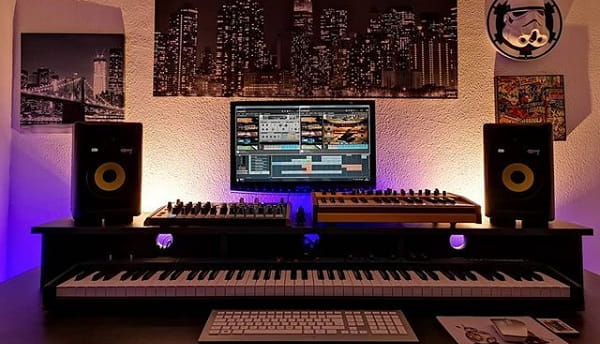
A basement is the single best location in any Indian home for a recording studio, for a reason that makes perfect technical sense: the underground environment provides natural sound isolation that studio designers spend enormous amounts of money replicating in above-ground spaces. Street noise, traffic sounds, and neighbourhood ambient sound — the persistent enemies of clean audio recording — are significantly attenuated by the surrounding earth mass. A basement studio requires far less acoustic treatment investment to achieve professional-grade sound isolation than any ground-floor or upper-floor equivalent.
India’s content creation economy in 2026 has generated enormous demand for affordable recording facilities. YouTube creators who produce voiceovers, podcasters launching new shows, musicians recording demo tracks and original compositions, corporate clients who need narration recordings for training videos and advertising — all of these customers need a clean, quiet recording environment and are actively seeking affordable local options rather than expensive professional studios that charge Rs. 3,000 to Rs. 8,000 per hour.
A basement recording setup with professional acoustic panels on the walls and ceiling, a quality condenser microphone, an audio interface, a DAW (digital audio workstation) software installation on a dedicated computer, and basic monitoring speakers can be assembled for Rs. 3 to Rs. 5 lakh, and it rents at Rs. 500 to Rs. 1,500 per hour to content creators, musicians, and corporate clients. Regular studio users who book recurring weekly slots generate predictable monthly income without requiring daily marketing effort.
2. Home Gym and Personal Training Studio
Estimated startup cost: Rs. 2 lakh – Rs. 8 lakh Monthly earning potential: Rs. 40,000 – Rs. 1.5 lakh
A basement converted into a private gym is one of the most commercially viable basement businesses in urban India, particularly in residential neighbourhoods with high-density apartment populations where the nearest gym is either overcrowded, inconveniently located, or priced at a premium. A basement gym serving ten to fifteen regular clients on monthly subscriptions provides premium, uncrowded workout access at a price that undercuts commercial gyms while generating income from the space.
The basement’s privacy is a genuine selling point for this business model. Many Indian adults — particularly women — are more comfortable working out in a private, semi-residential setting than in a commercial gym environment. A personal training studio in a basement feels less intimidating, offers more focused attention from the trainer, and provides a level of privacy that the typical commercial gym cannot match. Charging Rs. 3,000 to Rs. 8,000 per month per client depending on whether personal training is included alongside the subscription, fifteen clients generate Rs. 45,000 to Rs. 1.2 lakh monthly from a basement that would otherwise sit unused.
Equipment investment — a commercial-grade treadmill, a power rack with barbell set, an adjustable dumbbell rack, kettlebells, resistance bands, and a quality rubber floor mat — represents the primary capital outlay. Ventilation is a non-negotiable consideration for this application: an industrial exhaust fan and air conditioning installation ensure the space is comfortable for intense physical activity.
3. Cloud Kitchen and Food Production Unit
Estimated startup cost: Rs. 2 lakh – Rs. 5 lakh Monthly earning potential: Rs. 50,000 – Rs. 1.5 lakh
A basement kitchen has been used for home food businesses across India’s residential neighbourhoods for decades, but the formalised cloud kitchen model — FSSAI-registered, Zomato and Swiggy-listed, commercially equipped — transforms an informal basement cooking setup into a scalable food delivery business. The basement’s separation from the family’s living space provides the physical and operational clarity that a formal food business requires: a dedicated production environment, separate equipment, a documented cleaning protocol, and compliance with food safety standards.
The capital for a basement cloud kitchen goes toward a commercial gas range with proper ventilation and exhaust (critical for a below-ground kitchen), a commercial refrigerator, food-safe work counters, packaging equipment, and FSSAI State Licence application. The ventilation system is the most technically demanding aspect of a basement kitchen — adequate exhaust and fresh air circulation are both mandatory for safe cooking and required for FSSAI compliance, so investing properly in this infrastructure is non-negotiable.
Revenue comes from Zomato and Swiggy delivery orders, WhatsApp-based tiffin subscriptions for neighbourhood customers, and weekend special order catering for events and parties. The basement location reduces overhead to near zero compared to a commercial kitchen space rental, making the margin profile significantly stronger than the same menu sold from a rented commercial cloud kitchen.
4. Coaching and Tuition Centre
Estimated startup cost: Rs. 1 lakh – Rs. 3 lakh Monthly earning potential: Rs. 35,000 – Rs. 1.2 lakh
Coaching centres have operated from residential basements across India for generations, and in 2026 the model is more commercially viable than ever given the sustained demand for competitive examination coaching and supplementary academic tutoring. A basement tuition centre benefits from the same zero-rent advantage as every other basement business, allowing the operator to price competitively against commercial coaching centres while maintaining better profit margins.
The basement’s privacy and quiet environment is actually an asset for a study setting — absent the street noise and visual distractions of a ground-floor or open commercial space, students in a basement coaching room focus better and the teaching environment feels deliberately contained and purposeful. A space of 400 to 600 square feet accommodates a batch of twelve to fifteen students comfortably with proper seating, whiteboards, a projector screen, and adequate lighting.
The key investment beyond furniture and basic equipment is sound proofing between the basement and the living spaces above — a thoughtful acoustic treatment that prevents teaching noise from disturbing family members and ensures that the coaching centre operates professionally rather than feeling like a makeshift arrangement.
5. Artisan Workshop and Handmade Products Studio
Estimated startup cost: Rs. 50,000 – Rs. 3 lakh Monthly earning potential: Rs. 25,000 – Rs. 80,000
A basement workshop is the natural home for any artisanal production business — woodworking, candle making, soap and skincare production, jewellery making, pottery, custom furniture, or leather goods — where the production process generates some degree of dust, smell, or noise that makes above-ground home production impractical. The basement’s separation from the main living area and its natural containment of dust, fragrance, and sound makes it the ideal artisan studio in any Indian independent house.
India’s artisanal products market in 2026 is growing strongly through Instagram and WhatsApp commerce, with urban consumers increasingly seeking handmade, locally crafted alternatives to mass-produced goods across categories from home fragrance to personalised gifts. A basement workshop producing 30 to 50 premium handmade candles per week, a small-batch jewellery line in sterling silver, or custom-order wooden furniture generates income directly proportional to production quality and Instagram following rather than footfall — making it a genuinely suitable basement business model.
The production setup costs depend entirely on the craft chosen, but most artisan workshop setups for candle making, jewellery, or soap production fall within Rs. 50,000 to Rs. 1.5 lakh in initial equipment. The basement provides the workspace, the Instagram page provides the storefront.
Frequently Asked Questions
Q: Are basement businesses legal in India?
A: Businesses operating from residential basements are subject to local municipal zoning regulations, which vary by city. In most Indian cities, home-based businesses in residential zones are permitted provided they do not create public nuisance, excessive noise, or commercial traffic. Businesses like coaching centres or food production must comply with FSSAI, fire safety, and ventilation requirements regardless of location. Consulting your local municipal corporation about zoning rules before significant investment is advisable.
Q: What is the biggest challenge in running a basement business in India?
A: Ventilation and waterproofing are the two most common physical challenges in Indian basements. A food or fitness business requires proper air circulation systems, and most Indian basements require waterproofing treatment before they are suitable for consistent commercial use.
Q: Do basement businesses save significantly on costs compared to rented spaces?
A: Yes — eliminating commercial rent is typically the basement business’s single greatest financial advantage. In Indian metros where commercial space rents Rs. 50 to Rs. 200 per square foot per month, a 400 square foot basement saves Rs. 20,000 to Rs. 80,000 monthly compared to renting equivalent commercial space.
Q: Which basement business requires the least renovation investment?
A: An artisan workshop or tuition centre requires the least structural renovation. Basic whitewashing, floor cleaning, proper lighting, and a dehumidifier are often sufficient. A cloud kitchen or recording studio requires more significant infrastructure investment in ventilation and acoustic treatment respectively.
Q: Can a basement business be listed on Google Maps?
A: Yes — a business operating from a basement can be listed on Google My Business with the home address if it is a service business accepting clients. Food businesses listed on Zomato and Swiggy require FSSAI registration and a verified kitchen address, which can be a basement kitchen provided it meets food safety standards.