“Quick money” is a phrase that attracts caution — and rightly so. India’s landscape is littered with schemes, pyramid structures, and get-rich-quick promises that evaporate alongside the savings of people who trusted them. This article is about something entirely different: legitimate businesses that generate first income within days or weeks rather than months, require minimal upfront investment, have immediate and verifiable demand, and do not depend on waiting for a slow audience-building or relationship-building cycle before the first rupee arrives.
The distinction between a quick-money business and a slow-income business is not the quality of the idea — it is the demand structure. A food stall sells to its first walk-in customer on day one. A YouTube channel waits eighteen months for monetisation. A coaching centre earns from its first student batch within two weeks of promotion. A manufacturing unit waits three months for the first production run to sell. Quick money comes from businesses where the customer is already nearby, already in need, and already willing to pay — today, not eventually.
Here are five businesses that fit this profile precisely in India in 2026.
1. Food Stall or Street Food Cart
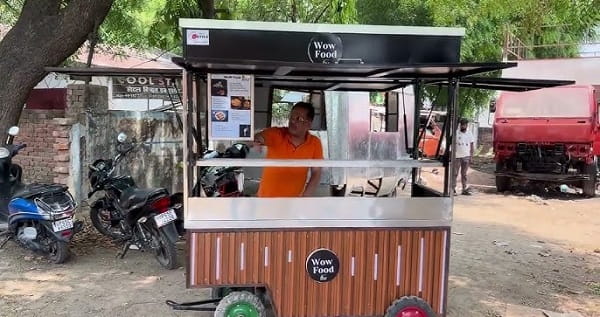
Estimated startup cost: Rs. 15,000 – Rs. 80,000 Days to first income: 1–3 days Monthly earning potential: Rs. 25,000 – Rs. 80,000
No business in India generates first income faster than a food stall positioned in a high-footfall location. A cart serving vada pav, chaat, dosa, rolls, or chai at a busy street corner, outside a school or college, near a metro exit, or along an office area does not need a marketing campaign, a website, or a customer database. It needs hot food, a visible location, fair pricing, and cleanliness. The first customer walks up within minutes of opening.
The rapid income generation comes from the combination of daily repeat customers and zero payment delays — every sale is cash or UPI, received immediately, with no invoicing cycle or collection risk. A well-positioned food cart serving fifty to one hundred customers per day at an average ticket of Rs. 40 to Rs. 80 generates Rs. 2,000 to Rs. 8,000 daily from the first week of operation.
The investment is minimal and largely moveable — the cart itself, a gas cylinder, basic cooking equipment, initial raw material stock, and FSSAI basic registration. The entire setup can be assembled in three to five days and moved if the first location proves suboptimal, giving the operator genuine flexibility that a shop or restaurant cannot offer.
2. Freelance Services (Writing, Design, Coding, Marketing)
Estimated startup cost: Rs. 0 – Rs. 20,000 Days to first income: 3–14 days Monthly earning potential: Rs. 20,000 – Rs. 1 lakh
Freelancing is the fastest money-generating business model for anyone who already possesses a marketable professional skill — content writing, graphic design, web development, video editing, digital marketing, data entry, translation, or virtual assistance. The reason is structural: Fiverr and Upwork allow a new seller to list services and receive the first paid order within days of registration, with no client relationship history required. A content writer who creates a clear Fiverr profile with two to three strong writing samples on Monday can reasonably expect a paid order by Friday.
In India in 2026, the most immediate income-generating freelance categories are content and copywriting (high volume demand, fast turnaround projects, many one-time clients who pay on delivery), social media management (monthly retainers that start paying from day one of the first month), and basic graphic design (logo creation, social media templates — quick to produce, quick to deliver, quick to receive payment).
The critical success factor for fast income in freelancing is not the platform — it is starting at a price point that generates quick early reviews rather than waiting for premium rates. Two or three well-reviewed early projects, even at below-market rates, create the social proof that allows the rate to double within sixty days as the profile builds trust.
3. Domestic Services (Home Cleaning, Plumbing, Electrical, Carpentry)
Estimated startup cost: Rs. 10,000 – Rs. 50,000 Days to first income: 1–5 days Monthly earning potential: Rs. 25,000 – Rs. 80,000
Urban India’s apartment population has both the need and the budget for professional home services — deep cleaning, minor plumbing repairs, electrical fitting work, AC servicing, carpentry, and painting — and the supply of reliable, responsive, technically competent service professionals is consistently below demand in most Indian cities. A person who registers on UrbanCompany (now Urban Company), Sulekha, or similar home services platforms, or who simply promotes their services in two to three housing society WhatsApp groups, begins receiving service calls within two to three days in any city with a reasonable population.
The payment is same-day, in cash or UPI, collected at the time of service delivery. There is no payment cycle, no invoice, no credit period. A home cleaning professional who completes three deep cleaning assignments per week at Rs. 1,500 to Rs. 3,000 per assignment earns Rs. 18,000 to Rs. 36,000 monthly from the first week of operation. An electrician completing four to six service calls per day at Rs. 300 to Rs. 800 per call earns Rs. 40,000 to Rs. 1.2 lakh monthly with genuinely minimal capital investment in tools.
4. Vehicle Aggregator Driving (Ola, Uber, Auto Rental)
Estimated startup cost: Rs. 0 – Rs. 50,000 (if vehicle needs modification) Days to first income: 1–3 days (after registration) Monthly earning potential: Rs. 20,000 – Rs. 60,000
For a person who owns or can arrange a vehicle — a car, an auto-rickshaw, or a two-wheeler for delivery aggregation — registering as a driver-partner on Ola, Uber, Rapido, or a delivery platform like Swiggy or Zomato generates income from the first approved ride or delivery. The onboarding process for these platforms has been streamlined significantly in 2026, with most cities processing driver applications within two to three working days if documents are in order.
A full-time Ola or Uber driver in a Tier-1 city earns Rs. 30,000 to Rs. 60,000 per month from daily rides, with earnings deposited weekly or fortnightly into the driver’s linked bank account. A Swiggy or Zomato delivery partner on a two-wheeler earns Rs. 15,000 to Rs. 35,000 per month depending on the number of completed deliveries per day and the incentive bonuses active in their city during peak periods.
The income begins literally from the first completed trip — making this the single fastest income-generating business option for anyone who has a vehicle and a clean driving record and needs money within the week.
5. Event Photography and Videography
Estimated startup cost: Rs. 30,000 – Rs. 1.5 lakh (camera equipment) Days to first income: 3–10 days Monthly earning potential: Rs. 25,000 – Rs. 1.5 lakh
Photography and videography generate fast income because the payment model is event-based and advance-payment-oriented: most event clients pay 50 percent advance at booking and 50 percent on delivery of edited photographs, meaning the first advance payment arrives before any work is performed. A photographer who promotes services in neighbourhood WhatsApp groups, on Instagram, and through personal contacts will typically receive the first booking inquiry within the first week if their portfolio demonstrates reasonable competence.
Birthday parties, engagement ceremonies, naming ceremonies, and corporate product shoots are the fastest-booking event categories because they are booked on shorter notice than weddings. A photographer who accepts these smaller-event bookings at Rs. 5,000 to Rs. 15,000 per event generates immediate income from the first week while building the portfolio that eventually commands wedding photography rates of Rs. 50,000 to Rs. 3 lakh per event.
The quick-money advantage is genuine: three birthday party bookings in a single weekend generate Rs. 15,000 to Rs. 45,000 in two days of work.
Frequently Asked Questions
Q: What is the single fastest way to earn money legally in India in 2026?
A: Vehicle aggregator driving (Ola, Uber, or delivery apps) generates income from the first completed trip — sometimes on the same day as platform registration approval — making it the fastest legitimate income option for anyone with a vehicle and valid documents.
Q: Can a food stall really generate Rs. 50,000 per month?
A: Yes — a well-positioned food cart serving a consistent 80 to 120 customers daily at an average ticket of Rs. 50 to Rs. 70 generates Rs. 4,000 to Rs. 8,400 daily, translating to Rs. 1.2 to Rs. 2.5 lakh monthly in gross revenue with food costs running 30 to 40 percent, leaving Rs. 70,000 to Rs. 1.5 lakh in gross margin before overhead.
Q: Do quick-money businesses require formal registration?
A: Food businesses require FSSAI basic registration from day one of commercial operation. Freelancers earning below Rs. 20 lakh annually do not need GST registration but should declare income in their annual ITR filing. Vehicle aggregator drivers are registered through the platform itself. Most domestic service providers operate as sole proprietors without formal registration in the early phase.
Q: How quickly can a freelancer earn their first Rs. 10,000?
A: A motivated freelancer who creates a strong Fiverr or Upwork profile with genuine samples, prices competitively, and applies actively to relevant projects can earn their first Rs. 10,000 within seven to fourteen days of registration in most categories.
Q: Are these quick-money businesses sustainable long-term?
A: All five are genuine businesses rather than temporary arrangements. Food stalls scale into restaurants. Freelancers scale into agencies. Home service professionals scale into multi-person service companies. Drivers expand into fleet operators. Photographers build into full-service studios. The “quick money” entry point is the starting phase of a real business, not a dead end.