Tier 3 cities — the urban centres and large towns with populations between 50,000 and 10 lakh that form the commercial backbone of India’s districts and talukas — represent one of the most genuinely underappreciated entrepreneurial frontiers in the country in 2026. Cities like Amritsar, Meerut, Guntur, Tirunelveli, Bikaner, Ajmer, Aligarh, Mathura, Jalandhar, Gorakhpur, Thrissur, and Warangal sit in a fascinating commercial position — large enough to have real and growing consumer demand, small enough that most metro-scale businesses have not yet entered to serve that demand.
The Tier 3 entrepreneur enjoys structural advantages that neither metro entrepreneurs nor pure village-level operators possess. Land and property costs are dramatically below urban metros. Labour costs are low. Competition in most formal service categories is thin or non-existent. And the consumer aspiration curve has been driven sharply upward in Tier 3 India by the combination of smartphone penetration, social media exposure to metro lifestyles, and rising household incomes from agricultural prosperity, remittances, and local government employment. Tier 3 India’s consumers want services and products they can see on Instagram and cannot currently access locally — and that gap is precisely where business opportunity lives.
1. Supermarket or Modern Retail Store

Estimated startup cost: Rs. 5 lakh – Rs. 20 lakh Monthly earning potential: Rs. 50,000 – Rs. 2 lakh
The contrast between what a Tier 3 city resident can access on Instagram and what they can find in their local market is nowhere more visible than in grocery and retail. Kirana stores dominate, but they stock limited range, inconsistent quality, and lack the organised display, printed pricing, and purchase experience that an increasingly aspirational consumer population actively wants. A properly organised modern retail store — clean layout, organised product categories, refrigerated dairy and beverages section, printed price tags, a systematic billing counter, and UPI payment acceptance — immediately differentiates from the kirana environment and attracts a customer base that will travel from across the town to access the quality of shopping experience they have seen in videos from larger cities.
The product mix should cover daily essentials (staples, dairy, beverages, personal care) but extend deliberately into categories that kiranas typically cannot carry: health and wellness products, imported confectionery and snacks, premium packaged foods, and local brand distribution. The modern retail environment also enables self-service, which reduces staff dependency per square foot of floor space compared to a counter-service kirana.
In Tier 3 cities specifically, being the first modern retail store to open in a town creates a competitive advantage that persists for years — early customers build loyalty, and later entrants find the market already pre-occupied by the established operator’s brand presence.
2. Professional Photography and Videography Studio
Estimated startup cost: Rs. 3 lakh – Rs. 8 lakh Monthly earning potential: Rs. 40,000 – Rs. 1.5 lakh
In Tier 3 cities and larger towns across India, the quality of available photography services for weddings, family portraits, commercial product shoots, and official photographs is typically low — basic DSLR operators without professional training, editing skills, or the ability to produce the cinematic wedding films and Instagram-worthy portrait sessions that Tier 3 city residents actively desire and actively aspire to commission for their events. The gap between what people in these cities want (the quality they see in wedding photography reels shared from larger cities) and what is locally available creates a clear and specific commercial opportunity.
A properly equipped photography studio in a Tier 3 city — with a simple studio backdrop setup for portraits and official photographs, a good camera and lens kit, professional lighting, and the editing skills to produce finished photographs and reels — competes against local photographers whose work quality is consistently lower while charging at rates that the Tier 3 consumer is genuinely willing to pay for significantly better output.
Wedding photography is the highest-value segment — a Tier 3 city wedding photographer who consistently delivers cinematic wedding films and edited photograph galleries charges Rs. 40,000 to Rs. 1.5 lakh per wedding, while competing against local alternatives charging Rs. 10,000 to Rs. 25,000 for significantly less polished output. The price premium for clearly superior quality is well-supported in this market.
3. Fast Food Restaurant or Café
Estimated startup cost: Rs. 5 lakh – Rs. 15 lakh Monthly earning potential: Rs. 50,000 – Rs. 2 lakh
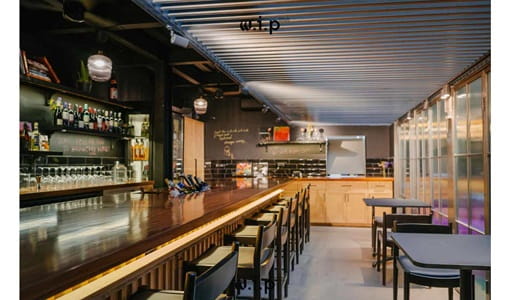
Tier 3 India’s food service market has a specific and commercially significant gap that neither the local dhaba nor the occasional national QSR franchise fully addresses: a clean, attractively designed café or quick-service restaurant where young people can sit, socialise, charge their phones, consume quality beverages and food, and generally access the kind of third-place social environment that people in larger cities take for granted. In many Tier 3 cities, this category does not exist at all — young people have nowhere to go beyond each other’s homes and traditional street food, and the aspiration for a café experience is widespread but entirely unmet.
A café with filtered coffee or proper espresso machine beverages, a menu of sandwiches, pasta, and the ubiquitous Maggi variations, decent interior design with charging points and WiFi, and air conditioning during summer months becomes a social hub that is simultaneously a food business and a community space. The regulars — college students, young working professionals, social groups — visit multiple times per week, creating revenue that is both consistent and growing as word spreads.
National QSR franchise opportunities are increasingly available at Tier 3 city investment levels in 2026 — brands like Biggies Burger, Munchbox, and several regional tea and coffee chains offer franchise formats specifically designed for Tier 3 deployment.
4. Healthcare and Diagnostic Services
Estimated startup cost: Rs. 8 lakh – Rs. 20 lakh Monthly earning potential: Rs. 60,000 – Rs. 3 lakh
Healthcare is the single most structurally underserved category in Tier 3 India. The distance between a Tier 3 city resident and a qualified specialist physician, a functioning MRI machine, a reliable pathology lab, or a properly equipped dental clinic is often measured in hours of travel rather than minutes. The National Health Policy’s primary healthcare push through the PM-JAY Ayushman Bharat scheme has improved government facility coverage, but the organised private healthcare market at the Tier 3 level remains far behind patient demand.
A diagnostic centre — blood tests, urine analysis, X-ray, ultrasound — partnered with an established chain like Dr Lal PathLabs or SRL Diagnostics for laboratory processing provides a professionally operated diagnostic facility in a Tier 3 city that serves both walk-in patients and physician referrals from local doctors who currently send patients to larger cities for tests. The sample collection and basic imaging can be done locally; complex tests are sent to the chain’s central laboratory.
A dental clinic, a physiotherapy centre, or a specialised outpatient clinic (dermatology, gynaecology, paediatrics) operated by a qualified doctor who is willing to serve a Tier 3 population fills a specific and deeply felt healthcare need, and the combination of lower operating costs, lower competition, and high patient volume characteristic of these markets typically produces significantly better economics than the same practice in a metro city.
5. Skill Training and Vocational Education Centre
Estimated startup cost: Rs. 2 lakh – Rs. 8 lakh Monthly earning potential: Rs. 35,000 – Rs. 1.5 lakh
India’s Tier 3 cities produce millions of school-leavers and graduates every year who are employable in concept but lack the specific vocational skills — spoken English, computer literacy, digital tools, beauty and grooming techniques, electrical work, plumbing, welding, or food processing — that convert educational qualifications into actual employment. The National Skill Development Corporation (NSDC) and PM Kaushal Vikas Yojana (PMKVY) have created a network of accreditation and partial funding support for private skill training centres, making the formal establishment of a training business in a Tier 3 city both commercially viable and government-supported.
A skill training centre in a Tier 3 city that offers two to three clearly defined, job-outcome-oriented vocational programmes — spoken English and computer skills for office employment, beauty and wellness certification for salon employment, or automotive repair for workshop employment — fills a genuine and urgent community need. The most powerful marketing asset for such a centre is visible employment outcomes from early batches: when a town sees that graduates of a specific programme are getting jobs in the nearest city, applications from the next batch fill themselves.
Course fees of Rs. 5,000 to Rs. 20,000 per student per three-month programme, across batches of fifteen to twenty students, generate Rs. 75,000 to Rs. 4 lakh per batch in gross revenue with operating costs that are modest in a Tier 3 setting.
Frequently Asked Questions
Q: What is the main competitive advantage of doing business in a Tier 3 city?
A: The primary advantage is low competition combined with genuine consumer aspiration. In most service and retail categories, Tier 3 cities have very few organised, quality-focused operators, meaning the first entrepreneur to build a genuinely good business in a category often faces years of competitive protection simply from being present and doing it well before anyone else does.
Q: What are the challenges unique to Tier 3 city businesses?
A: The primary challenges are smaller absolute customer base, longer relationship-building time to establish trust in an unfamiliar brand, limited availability of highly skilled staff, and occasionally bureaucratic friction from local government bodies. All of these are manageable with patience and genuine commitment to serving the local community.
Q: Can a Tier 3 city business expand to serve a larger geographic market?
A: Yes — e-commerce and digital service businesses based in Tier 3 cities regularly serve national markets. A skill training centre can expand to neighbouring towns. A photography studio builds a reputation that draws clients from surrounding districts. Businesses are not constrained to serve only the immediate city population.
Q: Are Tier 3 city consumers price-sensitive or quality-sensitive?
A: Both — but the quality-for-price calculation is distinct from metro consumers. Tier 3 consumers are very willing to pay for genuine quality improvement over what was previously available, but they will not pay metro prices for the same output without clear justification. Pricing that reflects local economic reality while delivering genuinely better quality than existing alternatives consistently wins this market.
Q: Does the PM Skill India Mission support skill training centres in Tier 3 cities?
A: Yes — the PMKVY scheme under the Ministry of Skill Development and Entrepreneurship specifically targets Tier 3 and rural areas for skill training deployment, with government funding available to NSDC-affiliated training partners for approved course categories. Applying for NSDC affiliation significantly reduces the effective cost of running a training programme in these cities.