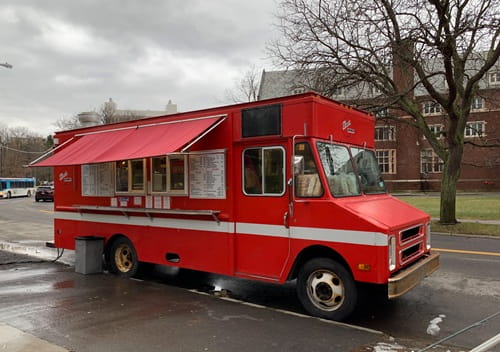
Scroll through Instagram in any Indian city today, and you’ll spot them everywhere, gleaming food trucks parked outside office parks, college campuses, and weekend markets, serving everything from gourmet momos to wood-fired pizzas. It looks like the dream small business: lower overhead than a restaurant, flexibility to chase footfall wherever it moves, and a genuinely lower entry cost. But that entry cost still runs into lakhs, the truck itself, kitchen equipment, licenses, and working capital before your first customer even pays for a plate.
This is exactly where a food truck business loan becomes the bridge between “I have a great menu idea” and “I actually have a truck parked outside a tech park on a Friday evening.” The good news is that India’s lending ecosystem, particularly government-backed schemes designed for exactly this kind of small enterprise, makes food truck financing genuinely accessible, provided you know which door to knock on and how to present your idea convincingly.
Why Food Trucks Fall Into a Genuinely Fundable Category
Here’s something worth knowing upfront: food trucks aren’t treated as some obscure, unusual business category by Indian lenders. Mobile food service units, small catering operations, and food processing businesses are explicitly recognised under multiple government lending schemes, most notably the Pradhan Mantri Mudra Yojana, which specifically lists small service food stalls, day-to-day catering, and canteen services among its eligible activities.
This matters because it means you’re not trying to convince a bank officer that your business model is legitimate from scratch. The framework already exists, and lenders across public banks, private banks, and NBFCs have processed thousands of similar applications before yours.
Understanding the MUDRA Loan Route First
For most first-time food truck entrepreneurs, the Pradhan Mantri Mudra Yojana is genuinely the most sensible starting point, largely because it’s specifically designed for exactly this kind of micro and small enterprise, and crucially, it doesn’t require collateral for loans up to ₹10 lakh.
MUDRA loans come structured across categories based on your funding need. If you’re just starting out and need a smaller amount, say for basic equipment and initial stock, the Shishu category covers loans up to ₹50,000. If your food truck needs a more substantial investment, the vehicle itself, a commercial kitchen setup, and enough working capital to run for the first few months, the Kishore category covers amounts between ₹50,000 and ₹5 lakh, while Tarun extends coverage up to ₹10 lakh for more established or ambitious setups.
Interest rates under MUDRA aren’t fixed by the government, they vary by lender based on your credit profile and the specific bank’s policies, generally ranging somewhere between 8.5% and 12% annually for reasonably qualified applicants, though rates can run considerably higher for weaker profiles or through certain NBFCs.
What You’ll Actually Need to Show a Lender
Getting approved isn’t just about filling out a form and hoping for the best. Lenders want to see that you’ve genuinely thought through your food truck concept, not just that you have enthusiasm for it.
A clear, written business plan matters more than people initially expect. This should cover what you’re serving, your target locations, your expected daily footfall and pricing, and a rough breakdown of how much the truck, equipment, and initial stock will actually cost. If you’re already running a small food stall or catering operation and looking to formalise it into a full food truck, bank statements showing your existing cash flow strengthen your application considerably.
On the documentation side, expect to provide standard identity and address proof, Aadhaar, PAN, and a recent utility bill or similar, along with any business registration documents you already hold. If you’ve been operating informally for a while, recent bank statements showing regular transaction activity help establish that you’re not proposing something entirely untested.
Don’t Overlook Licensing Before You Apply
This is a step first-time applicants frequently underestimate, and it can genuinely stall your loan application if you haven’t sorted it out. A food truck business in India needs an FSSAI license at minimum, since you’re handling and selling food to the public, along with local municipal permits specific to operating a mobile food vending unit in your city.
Some lenders explicitly ask for these licenses, or at least proof that you’ve applied for them, before disbursing funds, particularly for larger loan amounts. Getting your FSSAI registration and municipal permissions moving early, even before your loan gets approved, shows a lender you’re serious and reduces friction later in the process.
Choosing Between a Bank, an NBFC, and Government Portals
Where you apply shapes both your approval odds and how quickly you actually get funded. Public sector banks like SBI and other nationalised banks tend to offer the most competitive interest rates under MUDRA, but the process can sometimes take longer, particularly if your documentation isn’t fully in order from the start.
NBFCs and private lenders often move faster and are generally more flexible with borrowers who don’t have a long credit history, though this convenience typically comes with a somewhat higher interest rate. You can also apply directly through government portals like the Udyamimitra platform or JanSamarth, which route your application to multiple participating banks and NBFCs simultaneously, potentially widening your options without having to approach each lender individually.
Working Out How Much to Actually Borrow
A common mistake among first-time food truck entrepreneurs is either underestimating or wildly overestimating how much capital they genuinely need. Beyond the truck itself, factor in the cost of kitchen equipment specific to your menu, refrigeration units, gas connections, and any custom fabrication the truck needs. Add licensing fees, initial branding and signage, and crucially, enough working capital to cover at least two to three months of ingredient costs and staff wages before your revenue becomes predictable.
Borrowing too little often forces entrepreneurs into a cash crunch within the first few months, right when they’re still building a customer base. Borrowing significantly more than you need, on the other hand, just adds unnecessary interest burden on money that’s sitting idle. A realistic, itemised budget presented to your lender also tends to strengthen your application, since it signals you’ve actually done your homework rather than picking a round number.
Building Credibility Even Before You Apply
If you’re a completely new entrant with no prior food business experience, it genuinely helps to build some track record before walking into a bank. Running a smaller pop-up stall, a weekend market stand, or even a home-based delivery operation for a few months gives you actual sales data and customer feedback to show a lender, rather than just a concept on paper.
This doesn’t need to be elaborate. Even a few months of consistent, documented sales through UPI or a simple point-of-sale system creates a paper trail that makes your eventual food truck loan application considerably more convincing, since you’re no longer asking a lender to bet entirely on an untested idea.
Frequently Asked Questions
Q1. Can I get a MUDRA loan specifically to buy the food truck vehicle itself, or only for equipment and working capital?
Yes, MUDRA loans can cover the vehicle purchase as part of your overall food truck setup cost, provided the vehicle is being used commercially for your food business rather than personal use. The loan amount and category you apply under should reflect the vehicle’s actual cost alongside your other setup expenses.
Q2. Do I need an existing business to qualify, or can complete first-time entrepreneurs apply
First-time entrepreneurs can absolutely apply, and MUDRA loans specifically support new, income-generating micro enterprises, not just existing businesses. What matters more is presenting a clear, credible business plan rather than having years of prior food business experience.
Q3. Will my loan application get rejected if I don’t have a great credit score?
Most lenders, particularly under the MUDRA scheme, generally don’t heavily weight credit scores for smaller loan amounts, focusing instead on your business plan and documentation. That said, having no history of loan defaults is a basic eligibility requirement across virtually every lender, so clearing any existing dues before applying genuinely helps.
Q4. How long does it typically take to get a food truck loan approved and disbursed?
This varies considerably by lender and how complete your documentation is from the start. Straightforward applications with all documents in order sometimes get processed within a few days to a couple of weeks, while applications missing licenses or clear business plans can take considerably longer as lenders request additional information.