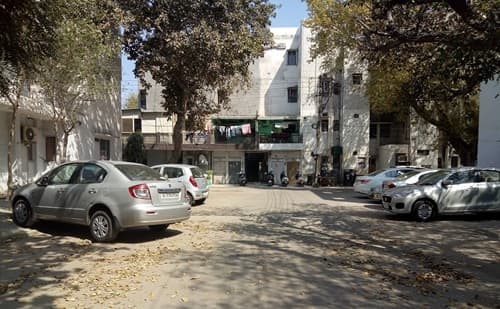
Every apartment complex in India is a self-contained economy in miniature. Behind those gates live hundreds of families with daily needs that are remarkably consistent — food, laundry, childcare, cleaning, delivery, maintenance — and a shared preference for sourcing these services as close to home as possible. The resident who walks three minutes to get fresh vegetables is not just being lazy. She is making a rational time-allocation decision in a city where the alternative involves traffic, parking, and forty minutes of her day. Proximity is the product. The business that solves a daily problem within walking distance of an apartment complex does not need Instagram ads or influencer campaigns. It needs to be visible, reliable, and there.
India’s apartment residential stock has expanded dramatically in the past decade. The Confederation of Real Estate Developers’ Associations of India reported over 1.2 lakh new apartment unit registrations in just the top eight cities in the calendar year 2025 alone. Bengaluru, Pune, Hyderabad, Chennai, Mumbai, and NCR are all home to increasingly large gated communities and apartment clusters where thousands of residents live in close proximity, served by an often-inadequate commercial infrastructure. This gap between what residents need daily and what is actually available in the surrounding commercial zone is where these businesses live.
1. Tiffin and Home-Cooked Meal Service
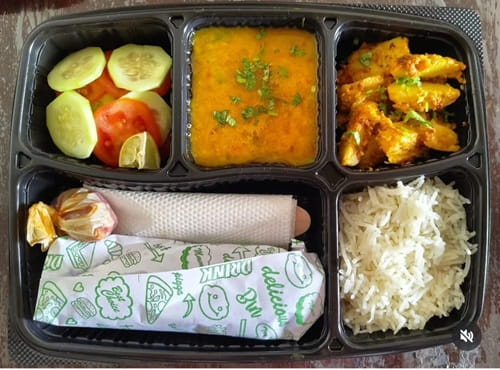
Estimated startup cost: Rs. 1 lakh – Rs. 3 lakh Monthly earning potential: Rs. 30,000 – Rs. 80,000
Working couples, single professionals, elderly residents who cannot cook daily, and bachelors who have neither the time nor the inclination for meal preparation are all concentrated in apartment complexes in quantities that make a tiffin service’s economics extremely attractive. The demand does not fluctuate seasonally and it does not respond to economic cycles the way discretionary businesses do — people eat every day regardless of market conditions.
The apartment complex setting creates a specific tiffin service opportunity that is different from the hospital-area or office-area variant. In an apartment, you are serving people in their homes, which means trust and food quality carry even greater weight than in a commercial setting. The WhatsApp group dynamic in residential societies is both your most powerful marketing tool and your most severe quality feedback mechanism — one deeply satisfied customer who posts about your food in the building group can fill your monthly subscription list within a week, and one food quality complaint travels equally fast.
A monthly subscription model works best here. Charge Rs. 2,500 to Rs. 4,000 per person per month for two meals daily. Begin with fifteen to twenty subscribers and cook from your home kitchen with FSSAI basic registration. Within six months of quality consistency, most apartment-area tiffin services grow to forty to sixty customers on word-of-mouth alone, requiring a kitchen assistant and a more structured production system.
2. Laundry and Dry Cleaning Service
Estimated startup cost: Rs. 2 lakh – Rs. 5 lakh Monthly earning potential: Rs. 40,000 – Rs. 1.2 lakh
Urban apartment residents have a laundry problem that no one has fully solved. Domestic helpers are unreliable. Building-level laundry facilities are inconsistent. Premium laundry apps exist but are priced for affluent users and have limited pickup coverage in many buildings. A well-run neighbourhood laundry service with apartment pickup and home delivery — operating from a small commercial space within two hundred metres of a dense apartment cluster — serves a genuine daily need at a price point the middle-income resident can sustain.
The operational model that generates the most consistent income is monthly subscription. A resident who pays Rs. 1,500 to Rs. 2,500 per month for weekly or bi-weekly laundry pickup becomes a reliable recurring revenue stream rather than a variable walk-in customer. The subscription model also helps you plan capacity, staffing, and machine utilisation far more accurately than a walk-in-only model.
In 2026, adding a garment ironing and folding service alongside basic washing significantly increases the per-customer revenue without proportional cost increase. A separate dry cleaning tier for formal wear, sarees, suits, and delicate fabrics commands premium pricing (Rs. 200 to Rs. 600 per garment depending on type) from exactly the demographic that populates urban apartment complexes.
3. Pet Care and Dog Walking Service
Estimated startup cost: Rs. 50,000 – Rs. 2 lakh Monthly earning potential: Rs. 25,000 – Rs. 70,000
Pet ownership in Indian apartment complexes has risen sharply in the post-2020 period, driven by remote-work lifestyle changes and the demonstrated mental health benefits of pet companionship. Most Indian apartment complexes are now home to dozens of dogs and cats, and their owners have a consistent set of needs that are incompletely served by existing options: daily dog walking, basic grooming, boarding during travel, and veterinary accompaniment.
Daily dog walking at Rs. 800 to Rs. 1,500 per dog per month from fifteen to twenty dogs in the same building complex produces Rs. 12,000 to Rs. 30,000 per month with essentially zero variable cost beyond your time and a pair of good shoes. Grooming sessions at Rs. 600 to Rs. 1,500 per session depending on the breed add a high-margin service layer. Pet boarding during festivals and long weekends — when apartment residents travel but cannot take pets — generates significant episodic revenue from the same customer base that generates your monthly walking income.
The fundamental requirement of this business is trust. Pet owners in apartment complexes will ask neighbours, check the building WhatsApp group, and request references before hiring anyone. Building that trust through consistent, caring, visible service in the complex itself — being seen walking the building’s resident dogs every morning — is your most powerful marketing strategy.
4. Home Cleaning and Deep Cleaning Service
Estimated startup cost: Rs. 1 lakh – Rs. 3 lakh Monthly earning potential: Rs. 35,000 – Rs. 1 lakh
Regular household help is inconsistent by nature — domestic helpers call in sick, relocate, or become unavailable without notice. A professional home cleaning service that operates on a scheduled, predictable basis fills the gap that unpredictable domestic help creates. In apartment complexes with high proportions of dual-income households, the demand for reliable professional cleaning is substantial and largely unmet by formal providers at accessible price points.
The business model has two tiers that serve different customer needs. Regular cleaning — a two-hour apartment clean twice per week at Rs. 800 to Rs. 1,200 per session — targets households supplementing or replacing domestic help. Deep cleaning — a four to six-hour comprehensive session covering kitchen appliances, bathroom tiles, sofa and mattress cleaning — at Rs. 2,500 to Rs. 5,000 per session targets residents who want a quarterly or half-yearly thorough clean beyond what regular helpers provide.
Professional equipment makes a visible difference here. A wet-dry vacuum cleaner, a sofa and mattress steam cleaning machine, and a high-pressure kitchen degreaser produce results that manual cleaning cannot match, and apartment residents who see that difference become long-term customers and active referrers.
5. Grocery and Daily Essentials Delivery via WhatsApp
Estimated startup cost: Rs. 2 lakh – Rs. 5 lakh Monthly earning potential: Rs. 30,000 – Rs. 90,000
The neighbourhood grocery model has been transformed in apartment areas by WhatsApp. A well-run grocery operation that accepts orders via WhatsApp until 8 PM and delivers to all apartments in a complex by 9 AM the following morning offers something Blinkit and Zepto do not — personalised credit, familiar product curation, and the implicit trust of a vendor who knows the building’s families by name. The WhatsApp-ordering kirana serving three or four adjacent apartment complexes can develop the kind of customer stickiness that no app-based competitor can replicate without operating at a local human level.
This model works best when the owner physically builds relationships within the apartment complex — visiting the building’s WhatsApp group regularly with daily deals, managing monthly credit accounts for trusted regulars, and curating a product mix that specifically reflects what the building’s resident demographic buys most. Fresh vegetables, dairy, eggs, and packaged staples are the daily necessities that drive daily contact. This daily contact is the commercial relationship that makes the business sticky.
Frequently Asked Questions
Q1. Do I need the Resident Welfare Association’s permission to operate near an apartment complex?
Businesses operating on public roads or private commercial plots adjacent to an apartment complex do not require RWA permission. Services operating within the complex — such as door-to-door deliveries or common area operations — benefit from RWA awareness and approval to avoid complaints.
Q2. Which apartment-adjacent business grows fastest through word-of-mouth?
Pet care and tiffin services spread fastest within apartment communities because daily visible activity (walking dogs, delivering tiffin boxes) generates organic curiosity and conversation among neighbours.
Q3. Is FSSAI registration mandatory for apartment-area food businesses?
Yes — any food business including tiffin services and home kitchens serving paying customers requires at minimum FSSAI Basic Registration, which costs Rs. 100 per year and is obtained online through the FSSAI portal.
Q4. How many flats does a building need to sustain a neighbourhood laundry business?
A laundry service serving an apartment complex of 200 to 300 units can sustain itself comfortably. With 40 to 50 monthly subscribers at Rs. 1,500 to Rs. 2,000 each, the fixed monthly recurring revenue covers operational costs with a healthy surplus.
Q5. Can I serve multiple apartment complexes from one location?
Yes — all five businesses scale efficiently across multiple complexes in close proximity. A tiffin service, laundry operation, or grocery delivery serving three or four apartment complexes within a one-kilometre radius has similar operational overhead to serving one but significantly higher revenue.