A petrol or CNG pump is one of the most reliably high-footfall commercial anchors that exists in any urban or semi-urban setting. Think about what happens at a petrol pump every day — vehicles arrive, stop, remain stationary for three to eight minutes while being fuelled, and then depart. During that stationary period, the driver and passengers are physically present, often slightly bored, occasionally hungry or thirsty, and entirely available to notice and purchase something from a business nearby. Multiply this by the hundreds of vehicles that a busy urban pump services daily and you have a commercial opportunity that is both large and structurally underutilised.
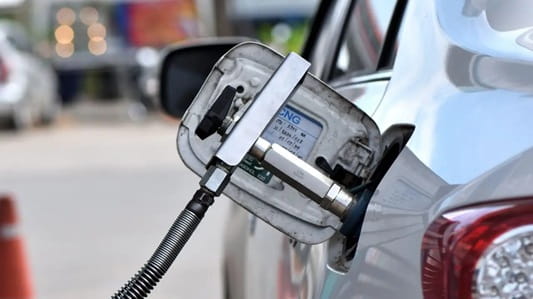
In 2026, the petrol pump setting has an additional dimension that did not exist five years ago. CNG vehicles now exceed 60 lakh registered units on Indian roads, and the fuelling time for a CNG vehicle is significantly longer than for a petrol vehicle — sometimes three to five minutes versus one to two minutes. Longer dwell time at the pump means longer windows for adjacent businesses to capture attention and generate purchases. The CNG pump is, in commercial terms, a more captive audience than the petrol pump, and businesses that serve CNG-heavy corridors (urban areas with high auto-rickshaw and taxi concentration) benefit proportionally.
India’s fuel retail modernisation has also changed the character of the petrol pump visit. Jio-bp, Indian Oil’s IndianOil One, and BPCL’s modern fuel retail format have demonstrated that a fuel station can be a multi-service destination rather than a single-service stop. The commercial format around fuel stations is actively evolving, and the anchor for this evolution is the network of small businesses that fill the spaces around the fuel dispensing point itself.
1. Quick Service Restaurant or Tea and Snacks Stall
Estimated startup cost: Rs. 2 lakh – Rs. 6 lakh Monthly earning potential: Rs. 50,000 – Rs. 1.5 lakh
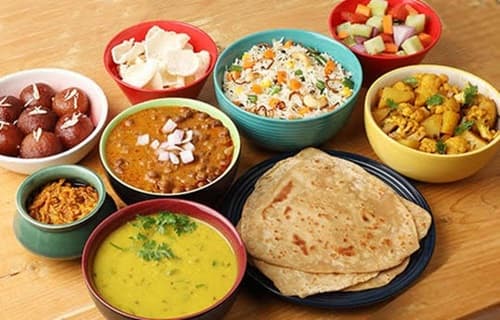
The number one need of any driver who stops to fuel their vehicle, waits while the tank fills, and looks around for something to do with those three to five minutes is a cup of tea or coffee. For truck drivers on longer journeys, it is a full meal. For families on a road trip, it is cold drinks and snacks for the children. A good quality, fast tea and snacks counter immediately adjacent to a petrol pump captures this demand without requiring any marketing because the customer is already there, already stationary, and already in a slightly hungry or thirsty state.
The most successful food businesses at petrol pump locations in 2026 are not elaborate menus — they are focused, fast operations with three to five items executed consistently well. Chai-biscuit-samosa for the daily commuter. Fresh lime soda and chaat for the family road trip stop. Good filter coffee and a vada or a sandwich for the IT professional commuting through a suburban corridor. The menu is determined by the road type and the customer profile, not by the operator’s personal preference.
Adjacent to modern CNG pumps on urban corridors, the dwell time of auto-rickshaws and app-based cab vehicles — which fuel several times per day — creates a specific high-frequency, lower-spend customer base that generates volume through sheer repetition. An autorickshaw driver who fills CNG twice daily becomes your customer four times per day when you serve a cup of chai at Rs. 15 that fits his economics perfectly.
2. Car Wash and Auto Detailing Centre
Estimated startup cost: Rs. 2 lakh – Rs. 5 lakh Monthly earning potential: Rs. 40,000 – Rs. 1.2 lakh
A petrol pump visit is the natural anchoring moment for a car wash purchase decision. The vehicle is already stopped. The driver already has a few minutes to wait. The car is in sight and the driver’s attention is on it. A well-positioned car wash bay immediately adjacent to the pump translates this natural attention into an upgrade sale — “while you’re fuelling, shall we do a quick exterior wash?” — that many drivers accept without needing any further persuasion.
In 2026, the car wash model has evolved from the basic bucket-and-sponge operation to a more credible service tier with pressure washers, foam wash equipment, interior vacuuming, and dashboard polishing. A basic exterior pressure wash at Rs. 150 to Rs. 250 serves the daily-spend customer. A full exterior plus interior clean at Rs. 400 to Rs. 600 serves the weekend care customer. Premium detailing — ceramic coating, paint protection film, interior deep clean — at Rs. 2,000 to Rs. 8,000 serves a smaller but high-value segment that fuels at the same pump and notices a quality detailing operation.
The CNG pump specifically benefits car wash adjacency because CNG auto-rickshaws — which visit the pump multiple times daily — represent a significant commercial vehicle cleaning segment that is largely unserved by formal car wash operations.
3. Auto Accessories and Tyre Shop
Estimated startup cost: Rs. 3 lakh – Rs. 8 lakh Monthly earning potential: Rs. 50,000 – Rs. 1.5 lakh
When a driver arrives at a petrol pump, their mind is on their vehicle. Any vehicle-related product or service placed visibly in their sightline during the fuelling wait has a dramatically higher conversion probability than the same product or service encountered in any other context. An auto accessories shop — selling car perfumes, seat covers, phone mounts, USB chargers, cleaning products, floor mats, and basic tools — captures the vehicle-mind-state of the pump customer with natural efficiency.
Adding tyre repair and air pressure service (which many pump visitors want but cannot always access at the pump itself) gives the shop a service dimension that generates daily traffic beyond product retail. Wheel alignment and puncture repair — which have daily demand near any high-traffic fuel station — round out a vehicle service offering that serves both the pump customer and the broader passing traffic simultaneously.
In urban CNG corridors, adding a CNG kit and tyre service for two-wheelers and three-wheelers creates a specialised workshop that serves the commercial vehicle segment — autorickshaws, delivery vehicles, and cabs — that dominates CNG pump traffic.
4. Convenience Store and EV Charging Point
Estimated startup cost: Rs. 4 lakh – Rs. 10 lakh Monthly earning potential: Rs. 55,000 – Rs. 1.8 lakh
Modern fuel stations globally combine fuel dispensing with a convenience retail component because the business logic is irresistible — every vehicle that stops to fuel is a potential store customer with three to eight minutes of unoccupied time. In India, this combination is still underdeveloped at most pump locations, particularly outside the major metro station corridors served by Indian Oil One or Jio-bp modern format stations.
A standalone convenience store set up on the commercial plot adjacent to a petrol pump — stocking cold beverages, packaged snacks, basic FMCG, OTC medicines, and vehicle accessories — captures the pump’s footfall as secondary store traffic. This is the same principle as the airport convenience store but applied to the petrol pump context where the customer is equally captive and equally time-limited.
The EV charging component adds a future-proofing dimension that is increasingly important in 2026. A two or three-AC charger EV charging station on the pump’s adjacent commercial plot serves the growing EV vehicle base — particularly electric two-wheelers which are proliferating rapidly in urban India — and adds a charging dwell time of 30 to 60 minutes that generates significantly more secondary store purchases than a three-minute petrol fill.
5. Insurance and Financial Services Kiosk
Estimated startup cost: Rs. 50,000 – Rs. 2 lakh Monthly earning potential: Rs. 30,000 – Rs. 80,000
This is the most unusual and most financially elegant business on this list, and it is based on a simple regulatory reality: vehicle insurance in India is mandatory, and millions of vehicles have expired insurance that their owners have been meaning to renew for weeks. A motor insurance kiosk adjacent to a petrol pump — where the customer’s vehicle ownership context is top of mind — captures a specific renewal intent that no other location reproduces as naturally.
As a registered insurance agent or a Point-of-Sale Person (POSP) licensed under IRDAI, you can sell motor insurance policies for multiple insurers from a small kiosk. A customer who arrives to refuel notices the insurance kiosk while waiting, remembers that her two-wheeler insurance expires next week, and completes the renewal in four minutes on your tablet — paying by UPI and receiving the policy document by WhatsApp immediately. This entire transaction takes less time than the fuelling itself, produces a commission of Rs. 200 to Rs. 800 per policy, and requires no product inventory.
Expanding to vehicle documentation services — PUC certificates, RC renewal assistance, driving licence renewal guidance, FASTag recharging — creates a one-stop vehicle documentation service that serves the pump’s existing customer base with multiple service types.
Frequently Asked Questions
Q1. Do I need the petrol pump owner’s permission to set up a business adjacent to it?
A: Businesses on privately owned or municipally owned commercial plots adjacent to a petrol pump do not require the pump dealer’s permission. However, building a cooperative relationship with the pump dealer is beneficial — mutual referral arrangements can increase footfall for both businesses.
Q2. Which petrol pump-adjacent business requires the lowest investment?
A: An insurance and financial services kiosk (Rs. 50,000 to Rs. 1 lakh) requires the lowest capital outlay. Your primary investment is IRDAI POSP licensing, a tablet, a small branded counter, and a printer.
Q3. Are CNG pump-adjacent businesses more profitable than petrol pump-adjacent ones?
A: In urban corridors with high auto-rickshaw and commercial vehicle density, yes — because CNG fuelling frequency per vehicle is higher than petrol fuelling, producing more daily visits from the same vehicle population.
Q4. Does a convenience store near a petrol pump need any special permissions?
A: A standard shop and establishment licence, GST registration, and FSSAI registration for any food items sold are the primary requirements. No fuel-specific permissions are needed for a retail store operating on adjacent private commercial land.
Q5. How does EV adoption affect petrol pump-adjacent businesses?
A: EV adoption reduces petrol pump footfall over time but simultaneously increases dwell time per vehicle visit as charging takes longer than fuelling. Businesses that serve longer-dwell customers — convenience stores, cafés, car washes — benefit from the EV transition, while purely impulse businesses that rely on very short stops need to adapt their model accordingly.