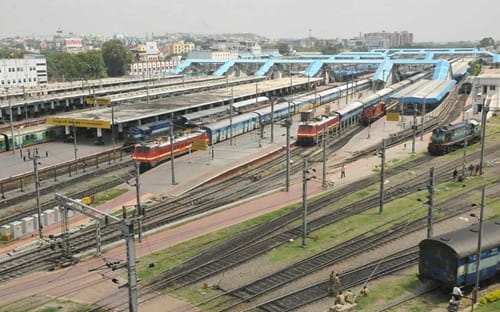
Tier 2 cities in India — a category encompassing cities like Jaipur, Indore, Lucknow, Surat, Coimbatore, Visakhapatnam, Nagpur, Bhubaneswar, Kochi, Vadodara, and Chandigarh — are in the middle of an economic transformation that is reshaping where entrepreneurial opportunity lives in this country. The McKinsey Global Institute has projected that 18 Tier 2 Indian cities could collectively generate revenues of $2 trillion by 2030, up from $690 billion in 2023 — a growth trajectory that exceeds the metro cities’ rate of expansion by a significant margin.
What makes Tier 2 cities commercially extraordinary in 2026 is not just their size or population — it is the specific combination of factors that rarely coexist in metros: lower commercial real estate costs, lower salary expectations for skilled employees, an aspirational middle-class consumer base that increasingly wants metro-quality products and services, significantly lower competition in most service categories, and a rapidly improving infrastructure of roads, airports, internet connectivity, and digital payments. The Tier 2 entrepreneur in India today faces a smaller customer base than a metro entrepreneur but proportionally far less competition, lower overheads, and a consumer base whose aspirations are running ahead of local supply.
1. Premium Salon and Grooming Studio
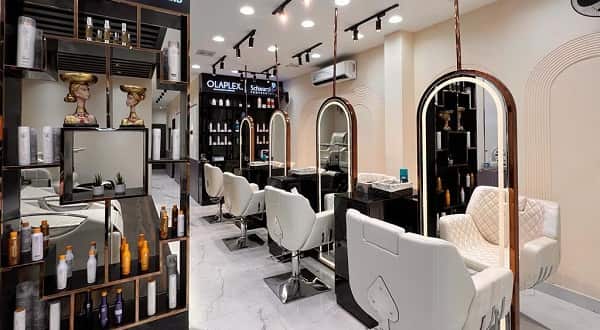
Estimated startup cost: Rs. 5 lakh – Rs. 15 lakh Monthly earning potential: Rs. 60,000 – Rs. 2 lakh
Every Tier 2 city in India has a large and growing population of young working professionals, newly married couples, college students, and aspiring middle-class families who spend regularly on grooming and personal care — and who are acutely aware that the quality gap between what is available locally and what exists in metro cities is wide. A premium salon offering consistent, technically trained services in a clean, aesthetically designed space fills this gap in a category that is otherwise dominated by either traditional neighbourhood saloons or the outermost franchises of national chains that have no local understanding.
The Tier 2 advantage in salon businesses is particularly stark when it comes to staffing and real estate. A trained hair stylist who commands Rs. 35,000 to Rs. 50,000 per month in Bengaluru or Mumbai is available for Rs. 15,000 to Rs. 22,000 in Jaipur or Indore. A prime commercial space that costs Rs. 150 per square foot per month in Pune rents for Rs. 60 to Rs. 90 in Lucknow. The same service quality at equivalent pricing to a Bengaluru salon yields dramatically better margins in a Tier 2 setting.
Franchise options from brands like Lakmé Salon, TONI&GUY, or Jawed Habib provide a structured entry point with brand recognition. Independent operators who invest in quality training, good product lines, and a welcoming interior design consistently outperform generic saloons even without a national brand name, because the quality differential in Tier 2 cities is so visible that a genuinely good salon attracts city-wide clientele rather than just neighbourhood traffic.
2. Cloud Kitchen Serving Tier 2 City’s Unique Food Culture
Estimated startup cost: Rs. 3 lakh – Rs. 8 lakh Monthly earning potential: Rs. 50,000 – Rs. 2 lakh
Food delivery via Zomato and Swiggy has grown at its fastest pace in Tier 2 cities in 2025 and 2026, with platform data consistently showing higher order growth rates in cities like Indore, Jaipur, Surat, and Coimbatore than in the already-saturated metro markets. This growth comes from a first-wave adoption dynamic — residents of Tier 2 cities are experiencing the convenience of ordering restaurant-quality food at home for the first time, and their ordering frequency increases rapidly once the habit is established.
A cloud kitchen in a Tier 2 city has a specific and highly exploitable structural advantage: the local cuisine knowledge of the city’s residents is deep, their expectation for authentic regional flavours is high, and the existing app listings frequently consist of generic “pan-Indian” menus with no local identity. A cloud kitchen that builds its menu specifically around the city’s culinary identity — Indore’s poha-jalebi culture elevated for delivery, Lucknow’s Nawabi cuisine adapted for modern portions, Jaipur’s rajasthani thali given premium packaging — creates an immediate local identity that national chains cannot replicate without years of local product development.
The cloud kitchen model’s zero-dine-in-space requirement also means the Tier 2 real estate advantage is maximised — renting a commercial kitchen space in a Tier 2 city runs Rs. 8,000 to Rs. 25,000 per month compared to Rs. 30,000 to Rs. 80,000 in equivalent metro locations.
3. Digital Marketing Agency for Local Businesses
Estimated startup cost: Rs. 50,000 – Rs. 2 lakh Monthly earning potential: Rs. 60,000 – Rs. 2 lakh
India’s Tier 2 cities are home to enormous numbers of local businesses — thousands of retailers, restaurants, coaching institutes, clinics, real estate agents, jewellery shops, and service providers — who are simultaneously aware that digital presence matters and completely unable to execute it effectively without help. The metro digital marketing agency is either too expensive or too distracted by larger corporate clients to serve a Jaipur garment shop or a Lucknow coaching centre with genuine attention. A local digital marketing agency in the same city as its clients provides something metro agencies cannot: familiarity with the local market, the ability to shoot content at the client’s location the same day, and cultural understanding of what resonates with the specific city’s consumer base.
Charging Rs. 8,000 to Rs. 20,000 per client per month for a social media management and basic Meta advertising retainer, ten to fifteen clients generate Rs. 80,000 to Rs. 3 lakh monthly from a business that operates from a home or a small co-working space. The acquisition of early clients is straightforward: walk into commercial streets in the city, identify businesses with weak or no Instagram presence, and pitch with a clear before-and-after comparison of what two months of professional management could achieve for their account.
The Tier 2 competitive landscape for this service is significantly less crowded than in metro cities, where every second college graduate has launched a digital marketing agency and commoditised the entry market.
4. EV Sales, Servicing, and Charging Business
Estimated startup cost: Rs. 5 lakh – Rs. 20 lakh Monthly earning potential: Rs. 60,000 – Rs. 2.5 lakh
Electric two-wheeler adoption has accelerated faster in Tier 2 and Tier 3 Indian cities than in metros, driven by the combination of lower average incomes (making fuel savings more impactful), shorter average commute distances (making range anxiety less relevant), and lower traffic density (making EV riding genuinely more comfortable than in metro stop-start conditions). Brands like Ola Electric, Ather, TVS iQube, Bajaj Chetak, and Hero Vida have growing waiting lists in many Tier 2 cities, and the after-sales service infrastructure — charging, repair, battery health assessment — has not kept pace with sales growth.
An authorised dealership for an EV two-wheeler brand in a Tier 2 city that does not yet have saturated dealer coverage gives the entrepreneur both product sales margin (3 to 6 percent of vehicle sale price), service revenue from ongoing maintenance and repairs, and charging station income from a small EV charging bay on the premises. This three-revenue-stream model, combined with the government’s FAME-III scheme incentives that reduce the effective purchase price of EVs for end customers, makes the Tier 2 EV business structurally more attractive than the equivalent business in an already-saturated metro.
5. Coaching Centre for Competitive Examinations
Estimated startup cost: Rs. 3 lakh – Rs. 10 lakh Monthly earning potential: Rs. 70,000 – Rs. 2.5 lakh
India’s Tier 2 cities have produced a disproportionate share of IAS, IPS, IIT, and IIM aspirants for decades, precisely because these cities have large, education-focused middle-class families whose children grow up understanding that competitive examination success is the primary route to social mobility. The demand for quality JEE, NEET, UPSC, SSC, Railway, and banking examination coaching in every Tier 2 city significantly exceeds the supply of genuinely good coaching centres — a supply gap that creates a large, recurring commercial opportunity for qualified educators.
Cities like Kota have built their entire economy around competitive exam coaching. But the Kota model concentrates students from across India in one city — the opportunity for Tier 2 city entrepreneurs is building the high-quality local alternative that parents in their own city can access without the disruption and expense of relocating their child. A coaching centre that employs one or two strong subject teachers in the core subjects for a specific examination, maintains a batch size of twenty to forty students, and produces verifiable results within the first two years builds a reputation through results-based word-of-mouth that no advertising can replicate.
Frequently Asked Questions
Q: What specific Tier 2 cities have the strongest entrepreneurial ecosystems in India in 2026?
A: Indore, Jaipur, Lucknow, Surat, Coimbatore, and Bhubaneswar are consistently cited in 2026 research as Tier 2 cities with the strongest startup ecosystems, government support frameworks, and economic growth momentum.
Q: Is commercial real estate significantly cheaper in Tier 2 cities than metros?
A: Yes — commercial rents in Tier 2 cities are typically 40 to 60 percent lower than equivalent spaces in Bengaluru, Mumbai, or Delhi. This cost differential directly translates into stronger margins for the same quality of business in most categories.
Q: Which government schemes specifically support Tier 2 city entrepreneurs?
A: PM MUDRA Yojana, PMEGP, and Start-Up India are available nationally. Several Tier 2 states have additional schemes — Rajasthan’s iStart programme (Rs. 25 lakh matching funds), UP’s StartInUP policy, and MP’s MPIDC 25 percent incentives all specifically target entrepreneurs in their Tier 2 cities.
Q: Is talent available for skilled positions in Tier 2 cities?
A: Yes — reverse migration following the 2020-2022 work-from-home era brought large numbers of skilled professionals back to their Tier 2 home cities, and 2026 data shows hiring growth in Tier 2 cities exceeding metro hiring growth rates in several sectors including IT, healthcare, and digital services.
Q: How do Tier 2 city businesses reach customers beyond their local market?
A: E-commerce listings (Amazon, Flipkart, Meesho), social media marketing, Google My Business optimisation, and participation in GeM government e-marketplace all allow Tier 2 city businesses to access national customer bases while maintaining the cost advantages of their home location.