A budget of Rs. 5 lakh sits in an interesting position in India’s entrepreneurial landscape. It is modest enough that you cannot afford to be reckless — there is no buffer for a poorly chosen idea or a lazy launch. But it is also meaningful enough to build something real, something with physical infrastructure or a product line, rather than just a solo service based on your laptop. The Rs. 5 lakh entrepreneur can do things that the Rs. 1 lakh entrepreneur simply cannot: lease a small space, buy semi-professional equipment, hire one part-time helper, hold inventory, and build a brand with packaging that looks the part.
India in 2026 is particularly rewarding for entrepreneurs at this budget level because the government’s MSME push — through Udyam registration, PM MUDRA Yojana, and digital payment adoption — has reduced the friction of formalising a small business significantly. You register, you open a business account, you start. Here are five businesses that consistently work at this investment level today.
1. Cloud Kitchen
Estimated startup cost: Rs. 3 lakh – Rs. 5 lakh Monthly earning potential: Rs. 60,000 – Rs. 2 lakh
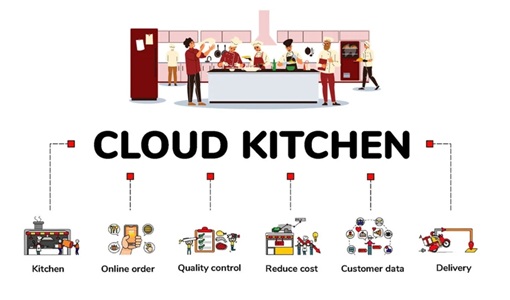
The cloud kitchen model has matured significantly since its rapid growth phase between 2020 and 2023. What exists now in 2026 is a tested, documented, and increasingly transparent business structure that a focused entrepreneur can replicate in a rented kitchen space without reinventing the wheel. The premise is simple — no dine-in seating, no front-of-house staff, no prime retail location required. You rent a commercial kitchen space in a residential catchment area, register on Zomato and Swiggy, and focus entirely on food quality and delivery speed.
Your Rs. 5 lakh investment covers a one-year lease on a 150 to 200 square foot commercial kitchen space, a commercial gas range, a refrigerator, packaging materials, FSSAI licensing, GST registration, and approximately three weeks of working capital. The key decision that determines success here is not the cuisine — it is the location. A cloud kitchen serving a 2-kilometre delivery radius densely populated with working professionals or student housing is a fundamentally different business from the same kitchen in a low-density residential suburb.
Two structural advantages make cloud kitchens particularly compelling in 2026. First, Zomato and Swiggy provide immediate customer discovery without any paid marketing — your food photographs and ratings do the selling. Second, the multi-brand kitchen model allows you to run two different menus (say, a healthy meal bowl brand alongside a biryani brand) from the same kitchen without additional cost, doubling your platform visibility and increasing the probability of appearing in diverse search results.
2. Digital Printing and Design Studio
Estimated startup cost: Rs. 2.5 lakh – Rs. 4.5 lakh Monthly earning potential: Rs. 40,000 – Rs. 1.2 lakh
Print-on-demand has become genuinely central to how Indian businesses, schools, colleges, weddings, and events present themselves in 2026. Every SME wants branded packaging. Every college festival needs banner flex printing. Every corporate office wants branded merchandise for their next conference. And the quality bar has risen — the era of blurry, faded print on cheap material being acceptable to customers is over.
A digital printing setup within Rs. 5 lakh includes a mid-range large-format inkjet printer for flex and vinyl printing, a heat-press machine for garment printing, a sublimation printer for mugs and ceramic items, and a basic computer with design software. The combined purchase of these machines through established wholesale channels in your city typically runs between Rs. 2.5 lakh and Rs. 4 lakh, leaving you working capital for your first month’s rent, materials, and basic local marketing.
The strategic edge in this business comes from combining print production with basic design services. A printing shop that only produces what customers bring to them is perpetually competing on price. A printing shop that also designs creates stickiness — customers who appreciate the design quality keep coming back and refer others. Charging Rs. 500 to Rs. 2,000 for a combined design-and-print service on top of the print cost itself transforms the margin profile of what is otherwise a commodity business.
3. Neighbourhood Grocery Store with WhatsApp Delivery
Estimated startup cost: Rs. 2 lakh – Rs. 4 lakh Monthly earning potential: Rs. 30,000 – Rs. 1 lakh
The kirana store in 2026 is not dead — it has evolved. The neighbourhood grocery businesses that are thriving are not competing with Blinkit and Zepto on speed. They are competing on something those platforms cannot offer: trust, credit flexibility, personalised service, and the ability to accommodate an unusual request at 9 PM via WhatsApp. A WhatsApp-based grocery delivery service serving 400 to 600 households within a 1-kilometre radius, with a small physical store as the operational base, fills a real gap that technology platforms routinely fail to close.
Your investment covers initial stock across staples, personal care, cleaning supplies, and packaged food (Rs. 1.2 lakh to Rs. 2 lakh in opening inventory), basic store shelving and weighing equipment, and two to three months of shop rent as security. The delivery model works with either a self-operated bicycle for a compact area or a part-time delivery person on a commission basis.
The differentiation strategy that has worked best for similar operations in Tier-2 cities in 2025 and 2026 is credit for trusted customers — something Blinkit will never do. A household that can say “add this to the month’s account, bhaiya” builds a loyalty that no discount campaign can replicate.
4. Pet Grooming and Pet Care Service
Estimated startup cost: Rs. 3 lakh – Rs. 5 lakh Monthly earning potential: Rs. 40,000 – Rs. 1.2 lakh
India’s pet economy is growing at a rate that would be hard to believe if the numbers were not so consistently verified across multiple industry reports. Urban pet ownership has risen sharply post-2020 and the spending per pet on grooming, nutrition, healthcare, and accessories has grown proportionately. In most Indian Tier-1 and larger Tier-2 cities, the supply of professional, hygienic, and genuine pet care services is significantly behind the demand for it.
A home-based or small studio pet grooming setup within Rs. 5 lakh includes professional grooming tools (Rs. 60,000 to Rs. 80,000), a grooming table, a portable bathing tub, a high-velocity dryer, basic pet care supplies and shampoos, and a modest studio renovation. Your highest-value decision here is the location — an apartment complex in which two hundred to three hundred families live, many with dogs, is its own captive market. Operating from a compact setup within or adjacent to such a complex creates a discovery and convenience advantage that no paid marketing can replicate.
The most successful small pet care businesses in India in 2026 are building recurring revenue through monthly grooming subscription packages — a Rs. 1,200 to Rs. 2,500 monthly plan per pet that covers regular bathing, grooming, and nail trimming. Twenty to twenty-five subscription customers generate a stable base income before any walk-in customers are counted.
5. Solar Product Dealership
Estimated startup cost: Rs. 4 lakh – Rs. 5 lakh Monthly earning potential: Rs. 50,000 – Rs. 1.5 lakh
The government’s PM Surya Ghar Muft Bijli Yojana scheme, which subsidises rooftop solar installation for households, has created a genuine and rapidly expanding market for solar product dealers across Indian cities and towns in 2026. Homeowners who qualify for the subsidy need a local dealer who can supply panels, manage the subsidy paperwork, handle the installation, and provide after-sales support. The central government has made this process more accessible, but local implementation partners — dealers with real on-ground presence — remain genuinely scarce outside major metros.
A solar product dealership at Rs. 4 to 5 lakh invests in display inventory (panels, solar water heaters, inverters), basic installation tools, a small showroom or display counter in a market area, manufacturer tie-ups for authorised dealership status, and the training required to advise customers meaningfully. The margins on solar products — particularly solar water heaters which are high-ticket items — are strong, and the installation service itself carries its own margin on top of the product sale.
Frequently Asked Questions
Q1. Which business from this list gives the fastest returns?
A: Digital printing typically breaks even fastest — within two to three months — because demand is immediate and payment is made at the time of order. Cloud kitchens can also turn profitable quickly with the right location and platform visibility.
Q2. Can I start these businesses in a Tier-2 city?
A: All five work in Tier-2 and larger Tier-3 cities. Pet grooming and solar dealerships are particularly well-suited to Tier-2 markets where the service gap is larger and competition is thinner than in metros.
Q3. Do I need any specific licence for these businesses?
A: Cloud kitchens require FSSAI registration and GST. Grocery stores need a shop and establishment licence and GST. Solar dealerships typically need manufacturer authorisation. Digital printing has minimal formal requirements beyond GST registration.
Q4. Can I get a MUDRA loan to fund these ideas?
A: Yes — PM MUDRA Yojana’s Kishor loan category covers Rs. 50,000 to Rs. 5 lakh for new and existing businesses. Most nationalised banks process these applications, and Udyam registration strengthens your eligibility.
Q5. How much working capital should I keep aside after initial setup?
A: Keep a minimum of 20 to 25 percent of your total budget as liquid working capital. Many businesses fail in the third and fourth month not because the idea is wrong but because they ran out of operational cash while waiting for customer volumes to stabilise.