Empty land in India in 2026 is not a liability — it is a waiting asset. The single most common financial mistake Indian landowners make is treating a vacant plot as a future decision to defer rather than a present income opportunity to activate. Land appreciates over time, which makes holding it rational. But land that earns income while you hold it appreciates and generates cash flow simultaneously — a combination that is simply superior in every financial scenario to holding an empty plot while paying annual property tax on it without a rupee of return.
India’s land use landscape in 2026 makes this opportunity particularly compelling. Urban parking shortage is acute in every Indian city. The EV charging infrastructure gap is real and government-incentivised. Agro-tourism demand has grown with urban India’s appetite for weekend experiences. Sports infrastructure demand far exceeds supply in residential areas. And the solar energy lease market has matured into a clean, structured commercial arrangement that landowners can enter with minimal operational involvement. Here are five businesses that convert empty land into consistent income today — not eventually, but from the month operations begin.
1. Paid Parking Lot
Estimated startup cost: Rs. 1 lakh – Rs. 5 lakh Monthly earning potential: Rs. 30,000 – Rs. 2 lakh
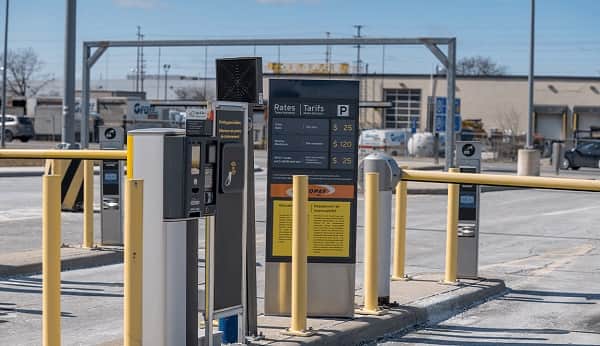
India’s urban vehicle population has outgrown its parking infrastructure so severely that paid parking near commercial zones, market areas, hospitals, metro stations, schools, and office clusters generates immediate, predictable daily revenue from the first day of operation. A plot of 2,000 to 5,000 square feet in any high-footfall urban location — even without a building, signage, or significant investment — accommodates twenty to fifty vehicles per day if properly organised with basic marking and security.
The setup investment is genuinely minimal: surface levelling and compaction, white paint markings for parking bays, basic fencing or barricading on the perimeter, a small security cabin, a simple gate, and a ticket or token system for fee collection. Monthly charges typically run Rs. 800 to Rs. 2,000 for reserved monthly passes for neighbourhood residents and office workers, supplemented by Rs. 20 to Rs. 100 for hourly or daily visitors.
In 2026, partnering with a parking management app — ParkSmart, MyParkings, or a local municipal corporation’s designated operator scheme — provides digital payment collection, automated bay management, and visibility in local search results that significantly increases vehicle throughput without requiring additional manpower. The business runs largely on its own once the security attendant system is established, making it one of the most passive income-generating land uses available.
2. Event Lawn and Celebration Ground
Estimated startup cost: Rs. 3 lakh – Rs. 15 lakh Monthly earning potential: Rs. 60,000 – Rs. 3 lakh
India’s wedding, celebration, and event economy is one of the most consistently high-value commercial segments in the country, and the demand for outdoor or semi-outdoor venues — particularly for pre-wedding functions, birthday parties, engagement ceremonies, small weddings, and corporate team outings — significantly exceeds supply in residential and semi-urban areas. A properly set up event lawn on empty land fills this gap with a business that earns Rs. 50,000 to Rs. 2 lakh per event booking and hosts multiple events per week during peak season.
The land requirements are straightforward: a flat plot of 5,000 to 15,000 square feet, access roads wide enough for vehicles and catering trucks, electrical connectivity for lighting and sound systems, and basic toilet facilities. The investment covers a permanent stage structure, boundary wall or fencing, lawn landscaping, outdoor lighting, a generator, and a small storage room for furniture. Tents, décor, and catering are typically supplied by the event organiser rather than the venue, keeping your infrastructure costs moderate.
Revenue comes from per-event booking fees. An event lawn near a residential colony in any Tier-1 or Tier-2 Indian city that hosts ten events per month at Rs. 40,000 to Rs. 1.5 lakh per event generates Rs. 4 to Rs. 15 lakh monthly during wedding season. Even at significantly lower activity levels during quieter months, the annual revenue from a well-located event lawn consistently outperforms almost every other non-constructed land use.
3. Solar Energy Lease
Estimated startup cost: Rs. 50,000 – Rs. 2 lakh (administrative costs only) Monthly earning potential: Rs. 15,000 – Rs. 1 lakh
Ground-mounted solar power plants are one of the most genuinely passive income uses available for open, unshaded land in India in 2026. The model is straightforward: you lease your land to a solar energy developer or directly invest in a solar installation and sell the generated electricity through a net metering arrangement or Power Purchase Agreement (PPA) with the local electricity distribution company. India’s solar energy policy environment in 2026 — PM Surya Ghar, KUSUM scheme for agricultural land, and state-level solar rooftop programmes — actively incentivises this model with capital subsidies and guaranteed off-take arrangements.
For a pure lease arrangement, the landowner receives a fixed annual lease payment from the solar developer (typically Rs. 50,000 to Rs. 2 lakh per acre per year depending on the state’s solar irradiance and grid connectivity) in exchange for twenty to twenty-five years of land use rights. The solar developer bears all capital and operational costs. The landowner contributes nothing beyond the land and collects rent with zero operational involvement — as close to genuine passive income as any land use model offers.
For landowners who want to invest directly rather than lease, a 25-50 kW ground-mounted solar installation on half an acre generates Rs. 30,000 to Rs. 75,000 per month in electricity revenue after operational costs, with the investment recovered in five to seven years and the system continuing to produce income for twenty-plus years afterward.
4. Sports Turf and Recreational Ground
Estimated startup cost: Rs. 5 lakh – Rs. 20 lakh Monthly earning potential: Rs. 40,000 – Rs. 1.5 lakh
India’s urban middle class in 2026 is actively and consistently spending on recreational fitness — football, cricket, badminton, basketball, and tennis — and the supply of accessible, bookable sports turf in residential areas is so far behind demand that new turf facilities in even moderately populated areas fill their booking calendar within a few months of opening. An artificial turf football ground on a 7,000 to 12,000 square foot plot generates Rs. 1,000 to Rs. 3,000 per hour in rental income from morning sessions to late-night bookings.
The investment covers artificial turf installation (the primary cost), floodlights for evening play, basic fencing, a small changing room and toilet facility, and booking management through a sports facility booking app like Playo or Hudle, both of which actively list new facilities and drive customer discovery without requiring any independent marketing by the facility owner.
Weekend slots are typically booked weeks in advance. Corporate team outings, neighbourhood tournaments, and regular weekly booking groups from local societies and office teams provide consistent monthly income that makes this one of the most reliable land uses for urban and semi-urban empty plots in the 3,000 to 15,000 square foot range.
5. Organic Farm and Agro-Tourism
Estimated startup cost: Rs. 1 lakh – Rs. 5 lakh Monthly earning potential: Rs. 30,000 – Rs. 1 lakh
The combination of organic vegetable farming with weekend agro-tourism has become one of the most commercially interesting models for empty agricultural or peri-urban land in India in 2026. The organic farming component generates direct revenue from vegetable sales to residential societies, restaurants, and organic retail stores. The agro-tourism component — charging urban families Rs. 300 to Rs. 800 per person for a weekend farm visit experience including vegetable picking, composting demonstrations, and fresh farm meals — generates a second, high-margin revenue stream from the same land with minimal additional infrastructure.
This model works best for land within 30 to 80 kilometres of a major city — close enough for a comfortable half-day or full-day trip from urban families seeking a weekend nature experience, far enough to have genuinely agricultural character. The farm itself is the attraction. Weekend visits are increasingly organised through Instagram, WhatsApp, and platforms like FarmStay India, and the social media content that farm visitors naturally create during their visits provides ongoing organic marketing that sustains future bookings without advertising spend.
Frequently Asked Questions
Q: What legal permissions are needed to use empty land commercially in India?
A: Permissions depend on the activity and location. Parking lots need municipal trade licences and local corporation approval. Event lawns need municipal NOC, fire safety clearance, and event-by-event permissions. Solar farms need state electricity board interconnection approval and DISCOM PPA agreements. Agricultural land use may be restricted by land conversion laws in your state. Consulting the local tehsildar and municipal office before investing is essential.
Q: Which empty land use generates the most consistent year-round income?
A: Paid parking lots generate the most consistent, season-independent daily income because vehicle parking demand is daily and non-seasonal. Solar lease income is the most completely passive and year-round stable, but requires appropriate land size and grid connectivity.
Q: How much land is needed minimum for each business?
A: Parking needs a minimum of 1,500 to 2,000 square feet. Event lawn needs 5,000 square feet minimum. Solar farm starts from half an acre for meaningful income. Sports turf needs 6,000 to 8,000 square feet for a small football ground. Organic farm starts productively from quarter of an acre.
Q: Can agricultural land be used for non-agricultural purposes without conversion?
A: In most Indian states, using agricultural land for parking, events, or construction requires formal land use conversion (from agricultural to non-agricultural) through the local Revenue and Land Records authority. Solar farms on agricultural land have specific state-level exemptions under schemes like PM-KUSUM — check your state’s specific solar-on-farm land policy.
Q: Is an event lawn business seasonal in India?
A: Yes — wedding and event season in most Indian cities peaks from October to February and around May. Revenue is significantly higher during these months. Building working capital from peak season earnings to sustain the slower months of March to April and June to September is essential planning for event lawn operators.