Highways operate on a fundamentally different commercial logic from any other business location in India. A shop in a residential colony builds its customer base gradually through years of neighbourhood relationships. A mall store depends on weekend footfall and seasonal promotions. A highway business gets thousands of potential customers driving past its frontage every single day, people who are in transit, who have specific immediate needs, and who will pay fairly for the service that meets those needs right now rather than waiting until they reach the next town.
India’s highway network is expanding at historic speed in 2026. The National Highways Authority of India has awarded contracts for over 26,000 kilometres of new and upgraded highway corridors under the Bharatmala Pariyojana Phase 1 and Phase 2, with projects completing across Rajasthan, Madhya Pradesh, Uttar Pradesh, Maharashtra, Karnataka, and the Northeast throughout 2025 and 2026. Every kilometre of new expressway that opens creates a fresh 50 to 100-kilometre commercial corridor where the existing service infrastructure is still catching up with the traffic volumes that the new road immediately generates. For entrepreneurs who can move quickly, the first-mover advantage in these new highway corridors is substantial.
1. Dhaba or Highway Restaurant
Estimated startup cost: Rs. 5 lakh – Rs. 15 lakh Monthly earning potential: Rs. 60,000 – Rs. 2.5 lakh
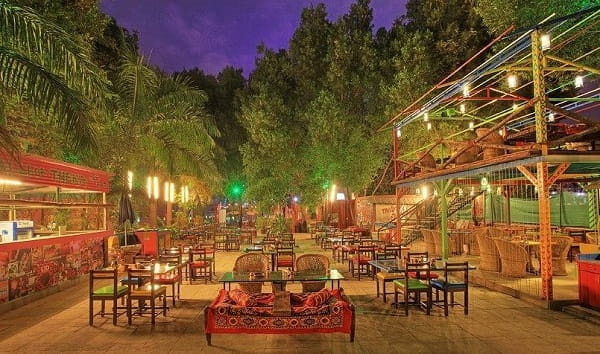
The dhaba is not just the most traditional highway business in India — it is the most consistently and most durably profitable one. The logic is immutable: humans need to eat every four to six hours, and a truck driver covering 500 kilometres in a day will stop to eat two to three times regardless of any other variable. He does not stop because of advertising. He stops because he is hungry, and the dhaba is there.
The distinction between a surviving dhaba and a thriving one in 2026 is cleanliness and consistency — two attributes that have historically been underweighted in the roadside food business. Families travelling by car on weekend road trips have developed strong hygiene awareness and are willing to travel an additional 20 minutes for a visibly clean restaurant over a closer dhaba with questionable kitchen standards. Truck drivers, who are the bedrock daily customer base, return to dhabas where the food is predictable — they do not want surprises, they want the same dal, roti, and sabzi that was good last time they passed.
A highway dhaba in 2026 should also have a basic Google My Business listing with photographs and operating hours. An enormous number of highway stops are now preceded by a phone search — “dhaba near me on NH48” or similar — which routes customers to establishments that appear in search results before they reach them physically. A simple, free Google listing with a few photographs of the food and the sitting area generates measurable incremental footfall.
2. Vehicle Repair and Puncture Shop
Estimated startup cost: Rs. 3 lakh – Rs. 8 lakh Monthly earning potential: Rs. 50,000 – Rs. 2 lakh
Every vehicle that breaks down on a highway creates an immediate, distress-purchase demand that is entirely insensitive to price. A driver with a punctured tyre, an overheated radiator, or a broken fan belt is not comparing service prices across providers — he is calling the nearest repair shop and paying whatever it takes to get moving again. This pricing psychology, combined with the volume of vehicles on any significant national highway, makes a well-equipped vehicle repair shop one of the most reliably profitable businesses in any highway setting.
The scope of services that generates the broadest customer base at a highway location is tyres (new, second-hand, and puncture repair), basic mechanical (fan belt, radiator issues, battery jumpstart), and electrical (wiring failures, headlight issues). Adding truck-tyre repair specifically — which requires different equipment and a larger lifting capacity than car tyres — captures the commercial vehicle segment that represents the highest volume on most national highways and generates the highest per-service revenue.
The critical operational factor is 24-hour availability or at minimum 18-hour availability. Breakdowns do not observe business hours. A repair shop that closes at 8 PM misses the night-traffic breakdown volume that is genuinely large on busy freight corridors.
3. Fuel Station Convenience Store
Estimated startup cost: Rs. 2 lakh – Rs. 4 lakh (store only, not fuel station) Monthly earning potential: Rs. 40,000 – Rs. 1.5 lakh
While establishing a petrol pump requires significant capital and regulatory clearances, a convenience store attached to or immediately adjacent to an existing fuel station requires neither. When a driver stops to refuel — a stop that generates zero revenue for anyone except the fuel company — they are already parked, already stepping out of their vehicle, and already in a purchasing mood. A well-stocked convenience store within visual range of the pump captures impulse purchases across every category: cold drinks, packaged snacks, biscuits, basic medicines, tobacco products, phone chargers, power banks, and personal care items.
In 2026, the best-performing highway convenience stores have also added a basic espresso machine or filter coffee dispenser — the demand for quality coffee on Indian highways has genuinely grown as the car-driving demographic has shifted toward higher-income, urban consumers who have daily coffee habits and actively seek a quality cup during a fuel stop.
4. Truck Parking and Rest Facility
Estimated startup cost: Rs. 8 lakh – Rs. 20 lakh Monthly earning potential: Rs. 60,000 – Rs. 2 lakh
India has approximately 3.5 million truckers operating on its road network, and they collectively drive hundreds of millions of kilometres every year without access to safe, clean, affordable parking facilities for their mandatory rest periods. Motor Vehicles Act fatigue regulations and insurance requirements increasingly require documented rest stops, and the absence of legitimate facilities across most Indian highway corridors creates a genuine need that a properly run truck parking facility addresses.
A basic facility on a 10,000 to 15,000 square foot plot near a highway includes marked parking bays for 30 to 40 trucks, a clean toilet block, a basic rest room or dormitory, and a dhaba or food service. The revenue comes from a parking fee per vehicle per night (typically Rs. 100 to Rs. 200), food service, and optional amenities like shower facilities (which command a separate fee). The cumulative revenue from a consistently occupied facility runs Rs. 70,000 to Rs. 2 lakh monthly at moderate capacity.
The land requirement is the primary barrier — a plot adjacent to the highway large enough for truck turning radii. Those who already own land adjacent to a national highway are significantly better positioned to pursue this model than those who need to acquire it.
5. Mobile Phone and Electronics Service Kiosk
Estimated startup cost: Rs. 1.5 lakh – Rs. 3 lakh Monthly earning potential: Rs. 25,000 – Rs. 70,000
This is the most underrepresented business in the highway commercial ecosystem despite the obvious and daily demand for it. A traveller on a four-hour highway journey whose phone battery dies at 40 percent, whose charging cable just broke, or whose earphones have malfunctioned has no place to address the problem until they reach a town. A small kiosk near a highway stop that sells phone accessories — cables, chargers, earphones, screen protectors, power banks — and offers basic phone repair for cracked screens and charging port issues captures a demand that has no current organised competition in most highway locations.
The investment is minimal — a small glass counter, initial accessory inventory from wholesale markets (Rs. 70,000 to Rs. 1 lakh), and basic repair tools. Location within an existing petrol pump facility, dhaba complex, or rest area maximises visibility to customers who are already stopping for other reasons.
Frequently Asked Questions
Q: What approvals are needed to start a dhaba on a national highway?
A: A highway dhaba requires FSSAI registration for food safety, NHAI approval for the operating point on a national highway, local municipal trade licence, fire safety clearance for the kitchen, and GST registration. Consult a local legal advisor for state-specific additional requirements.
Q: Is highway business seasonal or year-round?
A: Highway businesses are year-round with seasonal variation by traffic type. Tourist season peaks on specific corridors (pilgrim highways, hill station routes), while freight-heavy corridors (Bangalore-Mumbai, Delhi-Mumbai) have relatively flat year-round commercial vehicle volumes.
Q: How do I attract more customers to my highway business through digital marketing?
A: Register your business on Google My Business with photos, operating hours, and category-specific keywords. Highway travelers increasingly search for specific services on Google Maps while driving. This free listing captures customers who are already within 5 to 10 kilometres of your location.
Q: What is the biggest risk of a highway business?
A: Highway alignment changes and expressway bypasses are the primary risk — a new bypass road that redirects traffic away from your current location can dramatically reduce footfall. Verify NHAI project plans for your corridor before committing significant capital to any location.
Q: Which highway business works with the lowest investment?
A: A mobile phone accessories kiosk (Rs. 1.5 to Rs. 3 lakh) or a tea and snacks stall (Rs. 80,000 to Rs. 2 lakh) are the lowest-capital entry points. Both capture genuine daily demand with minimal setup and can be scaled based on observed traffic patterns.