Rural India in 2026 is not the economically stagnant, opportunity-poor landscape that urban assumptions often portray it as. India’s rural economy has been quietly transformed over the past five years by a combination of infrastructure investment — all-weather roads under PM Gram Sadak Yojana, rural broadband under BharatNet, and rural electrification — and digital adoption that has brought UPI payments, online banking, e-commerce delivery, and smartphone connectivity to villages that were barely connected a decade ago. The result is a rural commercial environment that has more genuine economic activity, more accessible finance, and more viable business models than at any previous point in modern Indian history.
The entrepreneur who starts a business in a village in 2026 carries genuine structural advantages that the urban entrepreneur lacks. Land and space are inexpensive. Competition in most categories is low or non-existent. The social trust networks that sustain local businesses — relationships built over years within a tight-knit community — come naturally in village settings. Government schemes specifically targeting rural livelihoods, from NABARD-backed dairy development to PMEGP manufacturing grants, provide financial support that urban businesses cannot access. And the first-mover advantage in a village that has no existing provider for a needed service is worth considerably more than the same advantage in a city of millions.
1. Dairy Farming and Value-Added Milk Products
Estimated startup cost: Rs. 2 lakh – Rs. 8 lakh Monthly earning potential: Rs. 40,000 – Rs. 1.5 lakh
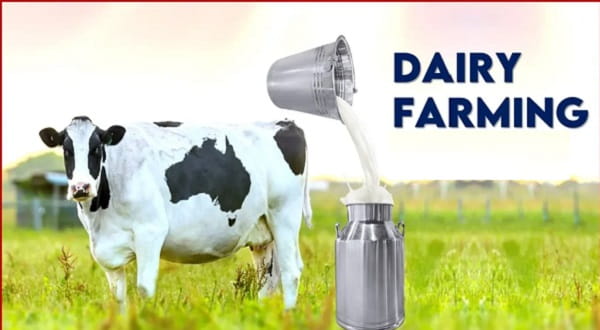
Dairy farming has been the backbone of rural India’s economy for centuries, and in 2026 it has evolved from a subsistence activity into a structured commercial business with multiple income streams, government support infrastructure, and national distribution networks that rural producers can tap into. A dairy unit of four to six high-yield cows or buffaloes produces sufficient daily milk volume to generate meaningful income either through direct household sales, supply to local sweet shops and tea stalls, or contractual supply to a cooperative like Amul, Mother Dairy, or a state dairy federation.
What has changed in 2026 is the value-added products opportunity. A rural dairy unit that processes its own milk into pure cow ghee, paneer, flavoured dahi, or cultured buttermilk earns two to four times more per litre of milk than the raw milk sale price. Premium cow ghee sourced from village dairies and marketed online through Instagram or through urban buyers who seek authentic farm-sourced products sells for Rs. 800 to Rs. 1,500 per kilogram — a significant premium over supermarket ghee. Building a small but direct urban customer base for premium village dairy products through a WhatsApp ordering system is a model that dozens of small rural dairies across India have validated successfully in the past two to three years.
Government support through the National Dairy Development Board, Rashtriya Gokul Mission, and state animal husbandry departments includes cattle purchase subsidies, milk chilling unit grants, and free veterinary camps that reduce the effective capital requirement and ongoing operating cost of a structured dairy business.
2. Organic Vegetable Farming and Direct Supply
Estimated startup cost: Rs. 30,000 – Rs. 2 lakh Monthly earning potential: Rs. 30,000 – Rs. 1 lakh
The Indian organic food market is growing at approximately 20 percent annually, driven by urban middle-class consumers who are actively seeking pesticide-free, traceable, locally grown vegetables and paying a meaningful premium for them. A village farmer who converts even a small plot — half an acre to two acres — to certified organic cultivation and builds a direct supply relationship with urban buyers, restaurants, or organic retail stores earns significantly more per kilogram than the mandi price for conventional produce.
The practical model that has produced the best results for small rural growers in 2026 is the community-supported agriculture approach — a group of forty to sixty urban families who pay a monthly subscription for a weekly vegetable box delivered from a specific farm. Each family pays Rs. 1,000 to Rs. 1,500 per month for fresh, seasonal organic produce. Forty families generate Rs. 40,000 to Rs. 60,000 in monthly guaranteed revenue for the farmer, independent of mandi price fluctuations. The farmer’s job is to grow consistently, communicate honestly about what is in season, and maintain the personal relationship with subscribers that gives the model its stickiness.
Apps like DeHaat, Ninjacart, and Aadhaar-linked agricultural marketplace platforms have also created direct-to-buyer channels for village farmers who do not want to manage urban customer relationships directly, providing a more structured route to market for organic produce at above-mandi prices.
3. Poultry Farming
Estimated startup cost: Rs. 1 lakh – Rs. 5 lakh Monthly earning potential: Rs. 40,000 – Rs. 1.2 lakh
Poultry farming is one of the fastest-return investment opportunities in rural India, with broiler chickens reaching market weight in 40 to 45 days and eggs generating daily income from laying hens. India’s poultry market — valued at approximately Rs. 2.3 lakh crore in 2024 — continues to grow at over 12 percent annually, driven by rising protein consumption across income levels, a growing restaurant and quick-service food sector that requires reliable poultry supply, and expanding rural income driving meat consumption in previously low-consumption areas.
A starter unit of 500 to 1,000 broiler birds in a rural area costs Rs. 1 to Rs. 2 lakh in shed construction, initial chick purchase, feed, and medicine for the first growing cycle. The shed is a fixed asset that reduces cost per cycle from the second batch onward. Revenue from the first cycle typically covers operating costs with a modest surplus, and the business scales profitably as bird numbers increase across subsequent cycles.
The contract farming model offered by integrators like Suguna Foods, Venkateshwara Hatcheries, and state poultry development corporations reduces the input and market risk significantly — the integrator provides day-old chicks, feed, and veterinary support, and guarantees purchase of the grown birds at a fixed rate, leaving the farmer to provide land, labour, and shed. This model is particularly appropriate for first-generation poultry farmers who want a structured, de-risked entry into the business.
4. Kirana Store with Digital Services
Estimated startup cost: Rs. 1 lakh – Rs. 3 lakh Monthly earning potential: Rs. 25,000 – Rs. 80,000
The neighbourhood general store has been the foundation of rural commerce for generations, but the kirana store of 2026 is a meaningfully different business from its predecessor. A village kirana that adds a Common Service Centre (CSC) or digital services counter alongside its traditional FMCG retail becomes a multi-service community hub that captures a far broader share of local economic activity than grocery sales alone.
The digital services component — government form assistance, Aadhaar updates, DigiLocker document access, insurance premium payments, utility bill collection, money transfers, and mobile recharges — generates service fees from village residents who need these services but lack the digital literacy or connectivity to perform them independently. The government’s CSC scheme provides the infrastructure and official designation for operators who qualify, while the kirana’s existing foot traffic provides a built-in customer base from day one.
In villages with poor internet connectivity, a CSC-equipped kirana that offers reliable WiFi access for a small hourly fee adds another revenue stream that village youth, students, and migrant workers returning for visits find genuinely valuable. The store simultaneously earns from daily grocery sales and from the digital service demand that the rest of the village generates, producing multiple revenue streams from a single location.
5. Mobile Repair and Electronics Service Centre
Estimated startup cost: Rs. 50,000 – Rs. 1.5 lakh Monthly earning potential: Rs. 25,000 – Rs. 70,000
Virtually every household in rural India now owns at least one smartphone in 2026. Farmers use phones for UPI payments and agricultural advisory apps. Students use them for online classes. Workers use them for apps that connect them to daily wage employment. And every one of these phones occasionally develops a cracked screen, a dead battery, a charging port problem, or a software issue that the owner cannot fix independently. The nearest qualified repair centre is often located in the nearest town — 15 to 30 kilometres away — creating a genuine and daily service gap in the village itself.
A village mobile repair shop staffed by someone who has completed a basic mobile repair course (widely available in ITIs and online for Rs. 5,000 to Rs. 15,000) captures this captive demand without any competition in most village settings. The repair tools — a precision screwdriver set, a heat gun, a motherboard rework station, and the most commonly needed spare parts for the top twenty phone models dominant in rural India — cost Rs. 30,000 to Rs. 50,000 in total. The accessories retail component (screen guards, phone covers, charging cables, earphones) adds daily small-ticket sales revenue alongside the repair income.
The 2026 evolution of this business is the addition of digital assistance services — helping villagers navigate government apps, troubleshoot payment failures, and set up internet banking — for a small fee per task. This positions the repair shop owner as the village’s technology resource person, generating goodwill, recurring service demand, and social capital that compounds into customer loyalty over time.
Frequently Asked Questions
Q: Which village business has the most stable year-round income?
A: A kirana store with digital services generates the most consistent year-round income because it serves daily essentials and daily digital service needs that do not fluctuate seasonally. Dairy farming is a close second, with year-round milk production providing daily revenue.
Q: Are government subsidies available for rural businesses?
A: Yes — PMEGP provides capital subsidies of 15 to 35 percent on project cost for manufacturing and service businesses. NABARD-backed dairy and agri schemes, PM MUDRA Yojana loans, and NRLM Self-Help Group credit linkages all provide accessible rural finance. Gram Panchayats and Block Development Officers are the local contacts for most schemes.
Q: Is organic farming certification expensive for small farmers?
A: Third-party organic certification through APEDA-recognised certifying bodies costs Rs. 5,000 to Rs. 15,000 per year for small farms. The Participatory Guarantee System (PGS) offered by the government is a lower-cost alternative that provides recognition without the full certification process.
Q: How do rural entrepreneurs market their products to urban buyers?
A: WhatsApp Business profiles shared through urban family and social networks, Instagram pages showcasing farm or product photographs, and platforms like DeHaat, Ninjacart, and local organic food groups on social media are the most effective low-cost marketing channels for rural producers targeting urban customers.
Q: Can a village mobile repair business generate sufficient income?
A: Yes — a mobile repair shop in a village of 3,000 to 5,000 residents with no competing repair service earns Rs. 25,000 to Rs. 50,000 per month from a combination of repair services and accessories retail, which is a meaningful income in a rural cost-of-living context.